
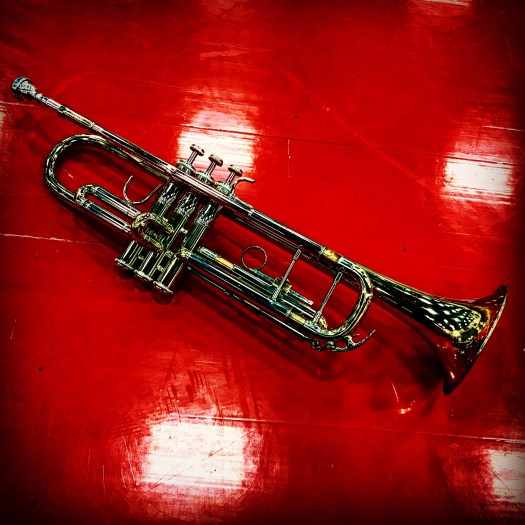
I spent the day at the Lorain County Solo & Ensemble Contest listening to students play music and adjucators provide feedback. When students were offered tips for improvement, many comments focused on breathing, posture, and expressing the mood of the music. It was clear that most students knew the music and simply trying to play better wasn’t the answer.
In life, most of us know what good behavior looks like. Whether we turn to the Bible, another religious text, a set of laws, or general morality, most humans develop some idea of what it means to be good.
When we fall short in our behavior, many of us simply try acting better. Unfortunately, this often results in short-lived changes and fairly ineffective efforts.
In the story of the Rich Young Man in the Bible, Jesus encounters a man who is focused on trying to act better…
Just then a man came up to Jesus and asked, “Teacher, what good thing must I do to get eternal life?”
“Why do you ask me about what is good?” Jesus replied. “There is only One who is good. If you want to enter life, keep the commandments.”
“Which ones?” he inquired.
Jesus replied, “‘You shall not murder, you shall not commit adultery, you shall not steal, you shall not give false testimony, honor your father and mother,’ and ‘love your neighbor as yourself.’”
“All these I have kept,” the young man said. “What do I still lack?”
Jesus answered, “If you want to be perfect, go, sell your possessions and give to the poor, and you will have treasure in heaven. Then come, follow me.”
When the young man heard this, he went away sad, because he had great wealth.
-Matthew 19:16-22
This man focuses on the music his life produces, but Jesus challenges him to think more deeply. While Jesus offers a call to action, he is getting at something even more fundamental. Like many stories in the Bible, this one contains multiple layers. True, it addresses wealth, but if we look more closely, we uncover something even more profound.
Jesus is calling this man to change his thoughts.
While we don’t know how he gained his wealth, since he is young I feel safe assuming the man either inherited it or comes from a wealthy family. He has likely spent most of his life viewing his idenity through wealth and status. His environment shaped him to picture his wealth as an integral part of who he is.
He can barely imagine life without his possessions. When Jesus presses him on the issue, he walks away, overcome with sadness.
The word translated “perfect” in this story could also be translated “made complete.” This story is not about achieving some level of moral perfection; rather, it is about finding wholeness.
This young man likely trusted in wealth for his identity. However, before we throw stones, we should look in the mirror. We may not depend on wealth, but how many of us ask social status, reputation, relationships, addiction, our number of friends on Facebook, or a host of other issues to provide the same thing?
What if changing our behavior isn’t about trying harder, but getting to the core issues of our experiences, our environment, our thoughts, and our moods, all of which shape the way we act.
It’s not significantly different from the instructions I heard from adjudicators today. Producing better music from an instrument requires a musician to breath well, have good posture, and use the right techniques. The result can be something beautiful.
If our desire is to become instruments producing beautiful music in our lives, focusing on our experiences, environment, thoughts, and moods can make it possible for our behavior to change from the inside out.
The Rich Young Man didn’t just need to sell his possessions. He needed to change what possessed him on the inside, enabling him to become more complete. What possesses you, holding you back from being whole?



 Breaking Into Peace