A year of reading

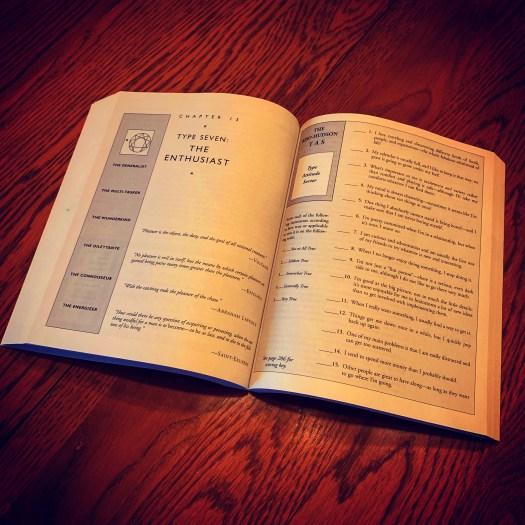
This year I started with a goal to read 50 books. With the book I finished yesterday, I have read or listened to a total of 60 books and audiobooks. That’s 17,240 pages and somewhere in the range of 4,500,000 to 5,000,000 words.

There were a wide variety of authors and subjects, including fiction, religion, psychology, spiritual growth, business, and biography. I didn’t agree with every author and everything they wrote. Some of what I read caused me to look hard in the mirror. Much of it challenged me to grow in what I think and how I live.

I invested a lot of time in reading in 2018, but I know I am a better person because of it.

Next year, I plan to read fewer books and invest some time in books I’ve already read. 2019 will be a time to dig a little deeper and examine previously discovered writings.

Reading is not meant to solidify our confirmation bias. Good reading will often force us to consider what we already believe and open doors to ways of thinking we never imagined.

If you are looking for something to read, please consider the list below. I encourage you to pick up a book, expand your mind, and hopefully become a better version of yourself.

  • Leaders Eat Last by Simon Sinek
  • The Servant by James C. Hunter
  • Razing Hell by Sharon L. Baker
  • Principles by Ray Dalio
  • Gender Roles and the People of God by Alice Matthews
  • Sinners in the Hands of a Loving God by Brian Zahnd
  • On Religion by John D. Caputo
  • The Courage to Be by Paul Tillich
  • Small Victories by Anne Lamott
  • Nature and the Human Soul by Bill Plotkin
  • Suprised by Scripture by N.T. Wright
  • Attached by Amir Levine and Rachel Heller
  • The Book of Forgiving by Desmond Tutu and Mpho Tutu
  • Confessions of a Funeral Director by Caleb Wilde
  • I Am Malala by Malala Yousafzai
  • The Hero with a Thousand Faces by Joseph Campbell
  • The Jewish Gospels by Daniel Boyarin
  • Love Wins by Rob Bell
  • The Defining Decade by Meg Jay
  • When Breath Becomes Air by Paul Kalanithi
  • Loss, Trauma, and Resilience by Pauline Boss
  • Necessary Endings by Henry Cloud
  • Becoming Wise by Krista Tippett
  • Healing Together by Suzanne B. Phillips and Dianne Kane
  • Behave by Robert M. Sapolsky
  • Sensible Shoes by Sharon Garlough Brown
  • The Vanishing American Adult by Ben Sasse
  • The Wisdom of the Enneagram by Don Richard Riso and Russ Hudson
  • The Road Back to You by Ian Morgan Cron and Suzanne Stabile
  • The Path Between Us by Suzanne Stabile
  • How Jesus Became God by Bart D. Ehrman
  • What We Talk About When We Talk About God by Rob Bell
  • The Great Spiritual Migration by Brian D. McLaren
  • Two Steps Forward by Sharon Garlough Brown
  • In the Footsteps of St. Paul by Richard Rohr
  • Personality Types by Don Richard Riso and Russ Hudson
  • Inspired by Rachel Held Evans
  • What is the Bible? by Rob Bell
  • Emotional Agility by Susan David
  • How to Be Here by Rob Bell
  • Everybody, Always by Bob Goff
  • Blink by Malcolm Gladwell
  • Barefoot by Sharon Garlough Brown
  • Teaching of the Twelve by Tony Jones
  • Receiving Love by Harville Hendrix and Helen LaKelly Hunt
  • Strength in Stillness by Bob Roth
  • David and Goliath by Malcolm Gladwell
  • A Flexible Faith by Bonnie Kristian
  • Jesus’ Plan for a New World by Richard Rohr and John Bookser Feister
  • The Cloud of Unknowing by unknown
  • An Extra Mile by Sharon Garlough Brown
  • Trauma and Addiction by Tian Dayton
  • It’s Not Supposed to Be This Way by Lysa TerKeurst
  • Another Kind of Madness by Stephen Hinshaw
  • How to Raise an Adult by Julie Lythcott-Haims
  • Tired of Apologizing for a Church I Don’t Belong To by Lillian Daniel
  • Surfing for God by Michael John Cusick
  • StrengthsFinder 2.0 by Tom Rath
  • The Fault in Our Stars by John Green
  • Returning From Camino by Alexander Shaia
Light in the darkness

Someone recently commented that much of what I have been posting on Facebook and writing in my blogs has sounded like I am depressed. I have been thinking about that and it’s part of what led to what I am sharing today.

This is a challenging time of the year for many people. While many celebrate with family, shop for gifts, watch feel-good movies, and attend festive parties, others sit alone, thinking of what they have lost. Friends and family who have died. Jobs lost. Empty bank accounts. Ghosts of Christmases past. Shattered dreams. A host of other reminders of this broken world.

When I write, I often struggle to find a healthy balance between vulnerability and oversharing. I strive to be honest with those who read, but I want to avoid the trap of saying too much, leaning into victimhood, or treating social media like a therapy session.

On the flip side, I never want to come across like I have it all together or that life is all good. This has been my struggle for years, not just in social media, but real life as well. For a long time, I hid behind laughter and jokes, creating the impression that life was one big celebration and there wasn’t much wrong. In sermons and Bible classes I would share some struggles, but they weren’t the deepest, darkest ones. They were the ones that were “safe” to say in public.

I no longer want to live in that world. I want to live in a world where I expose my darkness, not to exploit it or gain attention, but rather to be honest about how difficult and painful life is and can be. In a world where we use filters to make pictures look even better and carefully crafted posts to create the best, most edited versions of ourselves, we need a little transparency.

This is a dark season for me. Today, December 22, is my mom’s birthday. December 5 is the day my dad died. January 1 is my dad’s birthday. In the midst of all of this sits Christmas, a holiday my father never liked and tolerated for the benefit of his one and only child, and later his grandson.

So Advent holds multiple layers of meaning for me. In a season of life where I have experienced more loss than I would wish on even my enemies, I struggle with sadness. I wrestle with pain. I fight against the darkness knocking on my door. But Advent reminds me to wait and wait expectantly.

This is not an expectant waiting where everything will suddenly be perfect or turn out just the way I would like.

I remember as a child I would get the J.C. Penney and Sears catalogs and circle what I wanted. Without fail, everything I circled would show up under the tree. And as much as I appreciate my parents buying me so many gifts each Christmas, I wish they had been better at teaching me about disappoiment.

You see, my parents each had their own darkness they were trying to conceal. They had demons they seldom if ever talked about. They did all they could to hide them from me, and Christmas was one of those times when they worked at it the hardest.

These last few years have allowed me to see the world differently. I have strived to live in the tension between darkness and light, the non-dualistic world where suffering, pain, and disappointment live at the same address as hope, love, joy, and peace. It has been one of the hardest things I have ever done, but it has helped me appreciate the coming of Jesus in a new way.

Advent reminds me to wait, not for everything to be perfect, but for light to enter darkness. To hope for a better tomorrow, even when today sucks. To love myself and others, even when I feel unloved. To find joy, even in the midst of sadness. To experience peace, even when life seems like a living hell.

So I wait. I wait expectantly. I do not sit back and wait, but rather I join with God in the work of making all things new.

I cry. I laugh.

I scream. I rejoice.

I suffer. I comfort.

I doubt. I believe.

I no longer try to conceal the darkness, and that has taken away much of its power. But darkness still is and always will be part of my journey. Whether shadows from the past or present suffering, darkness will continue to be my companion on this adventure called life. But as we travel through Advent towards Christmas, we remember that God is coming, not just in words, but in action. Not just in thought, but in body.

I find it fitting that my mom’s birthday is the first day after the winter solstice. It reminds me that even though darkness haunted her and was passed on to me, better days are coming and the light can be a little more present every day.

Death, beauty, and life

On this day four years ago, I stood next to a bed, holding my father’s hand, telling him I loved him, and watching him take his last breath.

I have written before about the death of both my parents, but as life moves forward, so does the way death speaks into my life.

So much died on December 5, 2014. I lost my last living parent. I lost my last direct connection to the past. I lost the man I lived with and cared for the last year of his life.

When I was younger, I spent a lot of time with my dad. As a self-employed photographer, my dad was often able to take me with him to work during my childhood. We would have lunch together, and when situations allowed, I would watch my dad do photography or videography.

As I grew older, our relationship changed. We disussed politics and religion, sometimes with disagreement and almost always with passion. I walked alongside my dad as we faced the death of my mom, his wife. We spent the last years of his life moving into deeper discussions about life and death.

All of that was gone. With one final breath, the door closed on any more joking, talking, debating, and competing. A big part of my life died that chilly Friday morning.

But I have also found beauty in death. The beauty of my dad no longer suffering. The beauty of him finally experiencing the peace he desired for so long.

Another beauty emerged from death. The beauty of life…for me.

My dad had a strong personality. Over these last four years I have come to see ways his personality limited my growth in certain aspects of my life. This has been a difficult truth to admit at times, but one I have come to embrace.

I miss my dad often. There are times I want to tell him something. There are questions I want to ask him. There are words unspoken we will never share.

But from the ashes of my father’s death, new growth has emerged. His death freed me and nudged me to face things I would have likely left hidden. It enabled me to experience a level of God’s grace and mercy previously unknown to me.

I realize every person’s story is different. Death strikes each individual in a unique way. There is no template for grief, no list to follow. Yes, there are stages of grief, but they come to each of us in distinct and different ways.

For me, death has revealed beauty never before realized and life beyond what I had the capacity to see even a few years ago.

I miss you, Dad. There are conversations I want to have that will never happen. But I find beauty in the peace you have found and the peace that I am discovering as well.