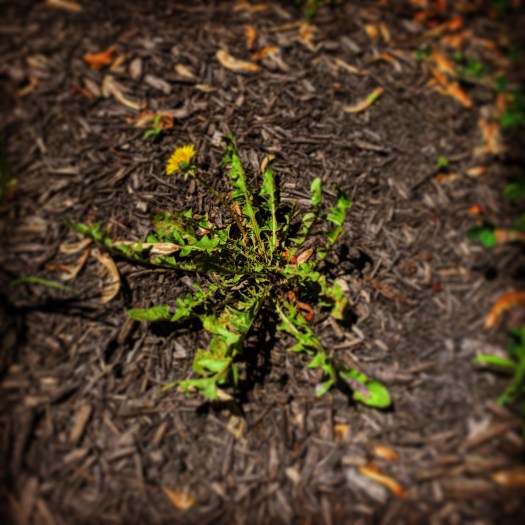
 I was recently weeding my flower bed and it got me to thinking…
Isn’t life a lot like a flower bed? We want it to be beautiful. We want everyone to admire it. We want to be able to sit back and enjoy it.
It’s also apt to get weeds pretty easily.
Some tend to get weeds more easily than others. I’m not an expert in landscaping, but I’d guess this is due to a variety of factors, including the quality of the soil, the surrounding environment, the weather conditions, and a host of other things.
Is life really that much different?
Some are planted in good soil: families with less dysfunction, sufficient resources to access better education, affectionate parents, and a stable childhood to name a few.
Others may find themselves in soil littered with dysfunction, abuse, abandonment, poverty, and other factors, some of which may remain unseen for a long time.
Some are exposed to a good environment: a good education, great job opportunities, and continued support. Others are exposed to toxins such as depression, addiction, missed opportunities, and other issues which may be found in their own lives or the lives of those around them.
I could continue, but I hope at this point you’re getting a picture of what I’m trying to illustrate. The factors are countless and each person’s experience in unique.
One of the problems we face is that each of us, to some degree or another, projects our experience onto others.
“Why can’t he just get a job?” asks the person whose parents helped with college, offered ongoing words of encouragement, and had connections to help her land that first great opportunity.
“Why can’t she just quit?” asks the person who was never abused, grew up in an emotionally healthy home, and never faced the same kinds of darkness.
“What is wrong with that person?” asks the individual who won’t take time to listen, offer compassion, or seek to understand the other person’s story.
Yes, there are people who won’t put in the effort to improve themselves or their situation. But there are also people who have had many advantages – sometimes subtle, but significant – that make their journey much easier.
There are also people working incredibly hard to overcome weeds that were placed in their lives during their childhood, difficulties that may have been present before they were born or even generations earlier.
Each of us is called to do our own weeding. For some, it is facing darkness that may have lurked under the surface for years, but has roots that run all over the place. For others, it is removing people or situations that have brought additional struggle. For some, it may be facing unrecognized prejudices or biases that blind them to the challenges others face.
This is not to make excuses. I have walked alongside more people than I can count in some dark times. It is true that some just don’t want to do the work. However, many others have a desire, but don’t know how to get out of the hole. Every step forward feels like two steps back.
We all need more grace and compassion, both for ourselves and others. We must find it in ourselves to weed our own garden while also helping others with theirs.
While I was weeding, my neighbor came over to talk with me and started pulling my weeds with me. For those few minutes, we shared conversation and work, and she made my burden just a little lighter.
Maybe we can all learn from her. We all have weeds. We all have work to do. But rather than criticizing the other person’s weeds, maybe we should walk over and help them pull a few.
Oh, how different our world might be.
 Breaking Into Peace