Recovery, Community, and Love

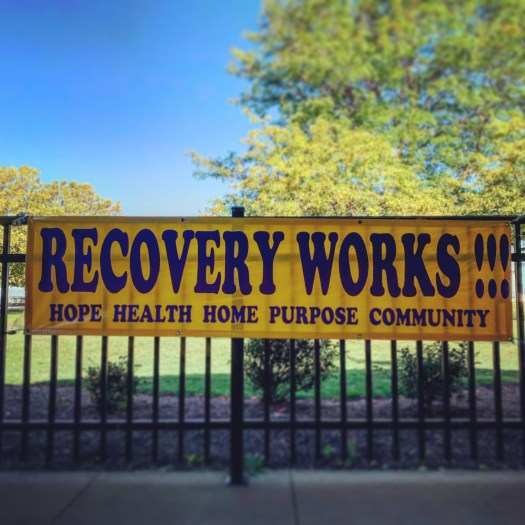
This weekend I attended the Recovery Walk in downtown Sandusky. It was a morning filled with encouragement, support, and love. One of the most moving moments was the recovery countdown. Everyone in recovery stood up and as each number of years of recovery was called out, people began sitting down. One year. Two years. Three years…

The final person standing was celebrating 50 years in recovery. There were loud cheers and applause for this man, as there were for each of the previous milestones.

After this individual with 50 years of sobriety sat down, anyone with less than a year of recovery was asked to stand. Eleven months. Ten months. Nine months…

As each month’s individuals sat down, the recovery veterans shouted out, “Keep coming back!” The last person standing was on her eighth day in recovery. The cheers for her were just as loud as for the man with 50 years of recovery under his belt. They called this young lady up front and everyone applauded her.

Why can’t our politics be more like this?

Why can’t our workplaces be more like this?

Why can’t our communities be more like this?

Why can’t our churches be more like this?

We have a President who loves calling people “losers.”

We have an economic system which tends to reward success and image and often penalizes or undervalues those who face struggles or have shortcomings.

We have communities where addicts are more often targets of gossip than recipients of grace and mercy.

We have churches where true vulnerability and transparency are not welcome.

What I saw this weekend was a community where everyone is welcome, all are loved, and failure brings embrace instead of exclusion.

This summer my town has experienced more than it’s fair share of tragedy, including drowning, murder, and suicide. People have asked why.

I don’t believe there is a simple explanation or answer. Trying to find a scapegoat, an excuse, or a simple explanation is taking the easy – and less meaningful – route. But I do believe the attitudes we develop in our communities, our nation, and our world are part of the solution.

Imagine if instead of insulting those we disagree with we would approach them with compassion.

Imagine if we looked at those with mental health struggles, addictions, and economic disadvantages as equals rather than burdens.

Imagine if we measured peoples’ value by their humanity instead of their productivity.

I was reminded today that our value is intrinsic. Each and every one of us is created in the image and likeness of the same Creator. While some of us have had more opportunities and luck and experienced greater “success,” none of us is better than the other.

If we could be completely honest, each of us would admit we are an addict in recovery from something. If it’s not alcohol, drugs, gambling, or sex, it might be reputation, financial achievement, or pleasure-seeking.

We are all in recovery. We all need community. We all need love. No matter what we look like on the surface, we really aren’t that much different.
Forgiveness

We live in a world where politicians are excoriated for something they said or did decades ago.

We live in a world where someone can’t host an awards show for a joke told years earlier.

We live in a world where people’s pasts continue to mark them and label them.

What has happened to forgiveness?

Don’t get me wrong, there are some missteps that call for consequences. Things like abuse, serious harm, and criminal acts cannot simply be swept under the rug. But there is a marked difference between restorative justice and retribution.

Retribution seeks revenge while restorative justice seeks peace. It seems so much of our world today seeks the former much more than the latter. I’ll say hateful things about you because you said them about me. Someone of my race/nation/group/etc was attacked, so now I’ll attack one of “your people.” You get the idea.

This is where forgiveness comes into play. Forgiveness is able to seek restorative justice but is incompatible with retribution.

What if we learned to embrace and practice forgiveness? What if we could forgive that person who hurt us, offended us, or wronged us? How would that change the dynamic?

I know what some will say. They deserve what they get. Punishment is the greatest deterrent.

I used to feel that way, but I don’t anymore.

How does my retaliation improve the situation? My hatred and anger back towards you throws more gasoline on an already burning fire. Most of the time retribution only sparks more violence and hatred.

Yes, there is a time to defend yourself and we will struggle to agree on where that line should be drawn. But leading with forgiveness can disarm and at least cool down most situations.

In my own life I have wrestled with forgiveness. Forgiveness for the man who ran a stop sign and killed my mom. Forgiveness for the family friend who sexually abused me. Forgiveness for others who have disrupted and derailed my life. None of these have been easy and, in some ways, forgiving these people will be a lifelong journey.

There is a saying attributed to several people, including Nelson Mandela, that states, “Holding onto anger is like drinking poison and expecting the other person to die.” Forgiveness is the pathway to releasing anger and resentment. Forgiveness allows us to transition from retribution to restoration.

Forgiving others is only part of the battle. Most of us – all of us to some extent if we’re honest – need to forgive ourselves as well. Until we learn to do this, forgiving others will be an even bigger challenge. Self-hatred causes anger to simmer inside us, often driving us to hurt others, ourself, or both.

I wonder how many mass shooters harbored self-hatred fueled by an inability to forgive themselves. I wonder how many political leaders lash out at others due to their own unattended issues. I wonder how many of us lash out at others partially due to a repressed or even unrealized need to forgive ourselves.

God knows I still struggle with this daily. Some days are far better than others, but the battle is ongoing. Maybe you don’t wrestle with this like I do or maybe you’re just in denial. Either way, I encourage you to consider how being more forgiving might transform the way you treat others or even yourself. I believe it’s worth the effort.