 Between Good Friday and Easter Sunday lies Holy Saturday – a day of waiting.
Most people don’t like waiting. We don’t do well with sitting in limbo.
But that’s what Holy Saturday really is. Limbo. A day between death and new life, between suffering and salvation.
While it’s one day on the church calendar each year, it is an archetype of our life, or at least seasons of life. It is a reminder periods of waiting often reside between death and new life.
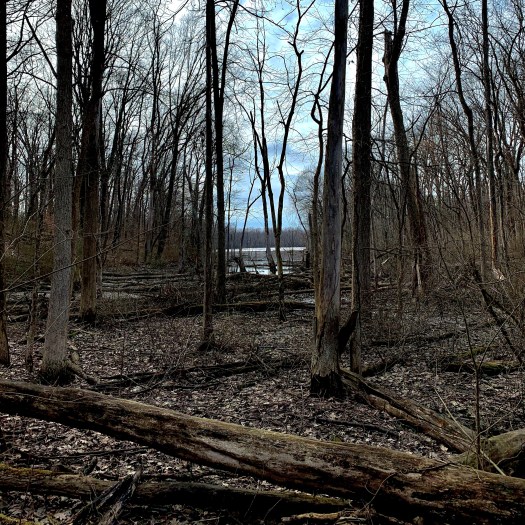
I think about this when I take walks at a local nature preserve in the winter and see the barren trees, the crumbling leaves, and the silence of animals waiting for spring.
I think about this when children grow up and leave home, and parents long to become grandparents and hold an infant once again.
I think about this when a relationship falls apart, and someone wonders if they will be alone forever.
I think about this when I hear of friends having a miscarriage and hoping for the chance to try again.
I think about this when I watch TV reports of millions of people in our nation who suddenly lost their jobs due to COVID-19 and await unemployment benefits and possibly an opportunity to return to work.
We don’t like to wait.
Our world is stuck in a global Saturday right now, awaiting the moment when things return to some level of normalcy. But let’s be honest, things will never be the same.
My grandparents were impacted for the rest of their lives by the Great Depression.
Our nation was different after the assassinations of JFK, Martin Luther King, Jr, and Robert Kennedy.
Most of us likely never watched a shuttle launch the same after the explosion of the Challenger.
So much changed in our world, especially in the United States, after 9/11.
Our world will not be the same after COVID-19.
But what are we doing while we wait? Will we grieve what we have lost or hope for new life? Will we allow ourselves to be changed? That is the question of Holy Saturday, and it is the question we face today as a world.
Holy Saturday reminds us that we must learn to live in the tension of death and new life, suffering and resurrection. We are all suffering grief in some way during this time of waiting. Grief has countless faces and reveals itself in a host of emotions and behaviors, not all of them healthy or helpful.
But one common experience we share is waiting. In waiting, we shouldn’t just drown out our pain with Netflix or act with hatred towards those we disagree with or discount the impact on the most vulnerable among us. Our common suffering should draw us closer, not tear us apart.
For some people, COVID-19 disrupted lives we felt we had control over. Retirement portfolios experiencing significant growth. Successful careers and businesses. Lives that seemed to be humming along.
For others, COVID-19 exacerbated already present struggles. Not enough income to make ends meet. Living paycheck to paycheck. Insufficient health care. Living in or on the brink of poverty.
Most of us likely find ourselves in between.
I know what it feels like to be stuck in that liminal space between death and resurrection, hopelessness and hope. It is a difficult place to be still and proactive at the same time, but waiting calls us to do just that. We cannot sit back and simply let life happen to us; neither can we pretend everything is fine and simply press on.
In times of waiting we are called to live in that tension. Grieve what is lost, while holding on to hope for the future. Don’t numb your pain, but fully embrace it. I don’t know the original source, but Richard Rohr writes, “If we do not transform our pain, we will most assuredly transmit it—usually to those closest to us: our family, our neighbors, our co-workers, and, invariably, the most vulnerable, our children.”
Use this time of waiting to transform your pain. If you find yourself transmitting it, stop, breathe, and choose a different path. If you find yourself lashing out, pause. And for some, you may even find you are taking it out on yourself. Love your neighbor. Love yourself.
Transforming pain is hard work. It requires complete honestly and vulnerability with both yourself and those you are closest to. It calls you to not numb the pain, but sit with it. It demands your willingness to remove facades or barriers to growth. And it’s not easy.
But while you’re waiting, allow this to be a time of change. What you are losing in the midst of COVID-19 could be the birthplace of something new. Transforming your pain could be just the bridge you need build so you can cross the valley of the shadow of death and find new life.
 Breaking Into Peace