Are we there yet?

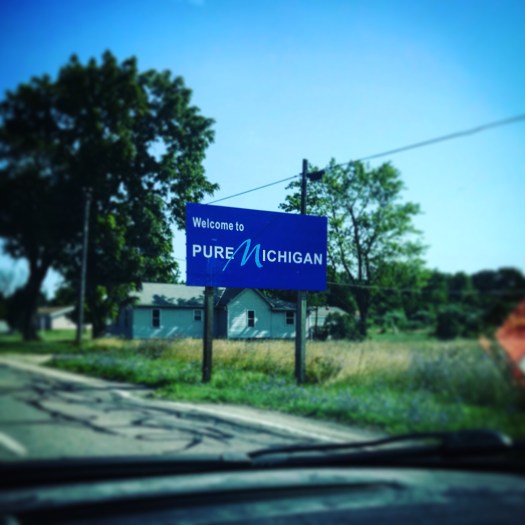
This weekend, my son and I are enjoying a trip to the west side of Michigan. It was 5-hour drive from our home in Ohio to the beautiful shores of Lake Michigan.

Sometimes it felt like we would never get there. Miles and miles of roads.

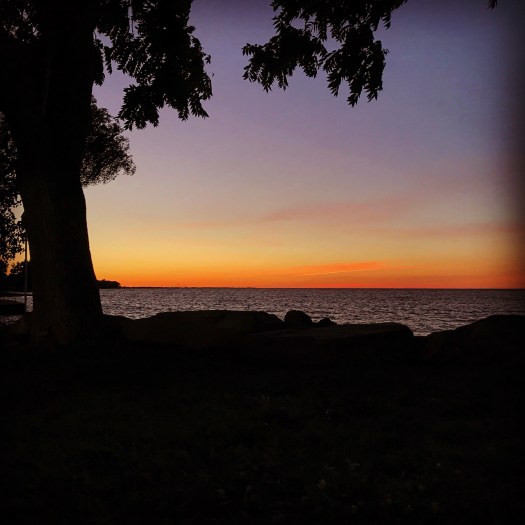
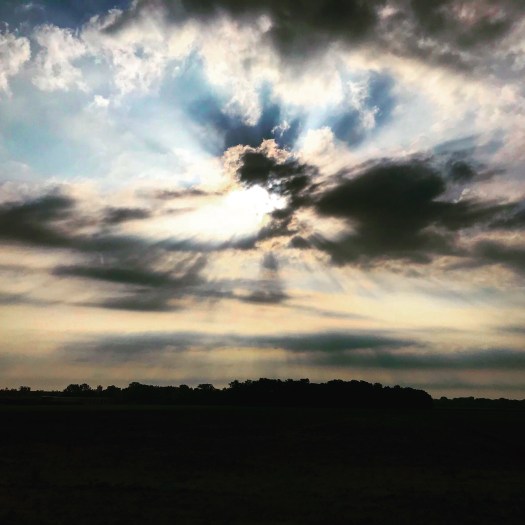
Eventually we arrived, and I was able to enjoy an evening exploring the sand dunes and witnessing a beautiful sunset.

Have you ever been on a trip with a child who constantly asks, “Are we there yet?” Fortunately, I didn’t hear much of that this weekend.

However, I find myself asking that question often on my journey of growth and healing. I want to get to the end and everything be just the way I want it.

I’m so impatient sometimes, looking over at God and asking when I’m going to arrive. There are moments I want to say, “You’re God. Can’t you just get me there now?!?”

The reality is I need the journey. I need the struggle. I need the moments that test me, stretch me, force me to do that thing I find uncomfortable or unpleasant. Those are an unavoidable part of getting there.

If you’re anything like me, you need those reminders to be present in the moment and find the value in the journey. I know I need to open myself up to the lessons and blessings in every moment, not just the ones I’m pushing to get to.

Life is filled with twists and turns, construction and detours, a host of unexpected stops along the way. These are all part of getting us where we need to go.

When I ask, “Are we there yet?” I need to listen to the small, still voice whispering, “No, you’re not there yet. But you’re on the way.”

The best and the worst of us

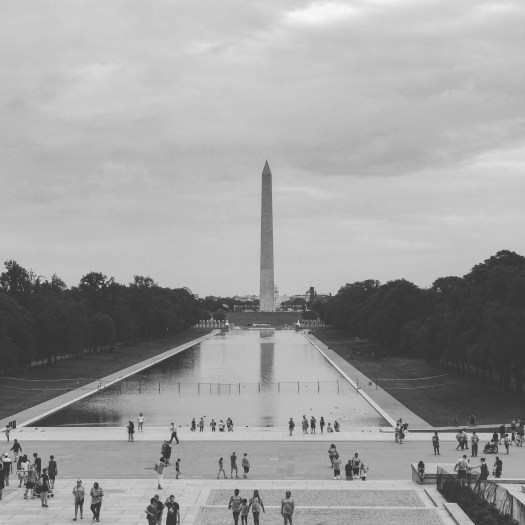
I traveled to Washington, DC for July 4th this year. It was an exciting trip and an opportunity to honor my parents by attending the Capitol Fourth concert, an event we watched together on television when I was growing up.

I spent most of the day on the 4th walking around, visiting various monuments and memorials. At each stop along the way, I was reminded of the complexity of the human experience. Love and hate. Joy and sorrow. Celebration and mourning. Life and death.

At the Lincoln Memorial, I stood at the place where Martin Luther King, Jr. stood to deliver his “I Have a Dream” speech. I thought of the beauty and hopefulness of his words, but also the violence and hate perpetrated on those of color and other minorities in our country, even to this day. The work of Abraham Lincoln continued on the steps of this building dedicated to him 50 years ago, and it still does.

At the Vietnam Memorial, I walked slowly, looking at the thousands of names, sons and daughters killed fighting a war in the jungles of southeast Asia. I began weeping as I thought of every spouse, parent, child, sibling, family member, and friend who experienced the loss of a loved one. The gravity of the ugliness of war weighed heavily on me in that moment.

At the Korean Memorial, the words “Freedom is not free” are engraved on a wall. Sacrifice is almost always part of the cost of freedom. Whether giving your life, your time, your energy, or any other part of what you have or who you are, we must be willing to give to something bigger than ourselves.

At the World War II Memorial, there is a rope connecting the columns for all 50 states, symboling how everyone worked together. And the distance from the Memorial to the Washington Monument is the same distance the troops had to travel when they stormed the beaches at Normandy. If we are going to accomplish anything of importance in this world, our best chance at success is working together, not against each other.

At the Martin Luther King, Jr. Memorial, I read the words of this man and was inspired by his vision to bring a people together, heal a nation (and the world), and communicate hope in the midst of difficulty.

At the Jefferson Monument, I was reminded of the contradictions of all human beings. Here we honor a man who had high ideals and grand dreams for our nation, but also owned and even fathered children with slaves. If we are honest, we all have a little of Jefferson in us, not quite living up to our greatest hopes and desires. Maybe we need to extend a little more grace to each other in light of this reality.

While I visited several other places, the final one I will write about here is the Holocaust Museum. My two hour journey through the history of what happened to the Jews and other groups was truly soul-crushing. At the end of the experience, I sat there and wept. The level of hatred, cold-bloodedness, and evil penetrated my deepest places. How can we human beings treat each other with so much contempt? How can we slaughter millions of innocent men, women, and children, simply because of their heritage or differing beliefs?

I witnessed the best and the worst of us during my short trip to DC. Many of us have incredible dreams, passion, and love. We all also have dark places we hate to admit or even acknowledge sometimes. We are all, to some extent, a mixture of everything I witnessed that day. But that is part of the human experience. I was reminded that one of the most important things is to admit all of it, at least to ourselves, and hopefully to those around us.

If this world is to be a better place, we must own the best and the worst of ourselves, our community, our leaders, our nation, and our world, extending grace to and demanding accountability from every human being we encounter. In our desire for justice, we must not use hate. In our passion for what we think is right, we must not act in ways that contradict our beliefs.

I have grown weary of people hating in the name of love, fighting in the name of peace, and condemning in the name of justice. There are times we must hate things, but never people. There are moments we must fight, but only when truly necessary. And there are actions that we certainly should condemn. But when situations call for such steps, let us still remember that every person is created in the image and likeness of the Creator, even those in the other party, the ones crossing a border, different races, and yes, even those who threaten to attack our nation.

This is the hard work, living in the tension of standing for what we believe while also acknowledging the humanity of every person. But it’s work we must do to move closer to the grand dream of Shalom in the world.
Looking back, moving forward

Last night I attended my 30th high school class reunion. There were dozens of familiar faces, many of whom I haven’t seen for years. It was an evening of stories and smiles, laughter and reminiscing.

But for me there was a darker, unseen side to the evening.

As I have mentioned recently, I’m going to be more transparent and vulnerable in this blog moving forward, and this is going to be a journey into that place.

I was a damaged person in middle school and high school. When the time is right, I plan to unpack some of the causes of my brokenness; for now, I’ll share one way I was broken.

I had very few real friends in high school. This is certainly not their fault for lack of effort or friendship. My woundedness both discouraged and prohibited me from any relationships that were deeply meaningful during that season of my life. I see that evidenced in the way I failed to stay truly connected with anyone from that time.

Looking around at people reconnecting and reminiscing, the shallowness and temporality of my high school relationships became tangible. I could taste it, sense it, feel it.

Let me pause briefly to share what I have been processing these last few hours. If you’re familiar with the Enneagram, I am a textbook Type 7. Sevens in stress move to Type 1. Without getting into all of the details (there are books dedicated to this), I could actually feel myself shifting into Oneness at my reunion. A friend I ran into later in the evening even mentioned they sensed a noticeable difference in me.

While I have undergone significant changes and growth over the last three years, last night shook me to the core. It exposed areas where I still need work, revealed deep wounds that are not completely healed, and – on a positive note – reaffirmed how much I have grown and healed and how much self-awareness I have gained.

We all carry around wounds from our past. Some wounds are deeper than others, but we are all broken to some extent.

I can tell you than burying much of my woundedness for the first 45 years of my life served me well on the surface, but made my internal life a living hell at times. The mental and emotional toxins I contained poisoned my soul. Last night revealed some toxins yet to be fully purged.

Last night served as a good barometer for me, showing how far I have come and how much lies ahead. I am thankful for where I stand today and sometimes overwhelmed by the work yet to be done.

If anything I’ve said relates to you, find someone to talk to. If you’ve been burying things, begin to uncover them. In subsequent posts, I will offer more insights, but in the meantime, I pray these words bring you hope.

Unlearning

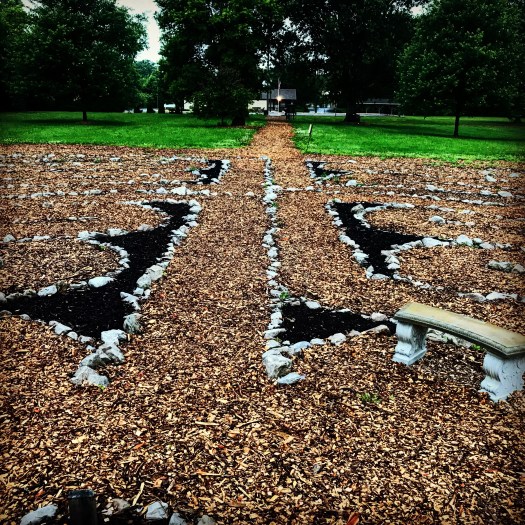
Yesterday I started reading a novel about the spiritual journey that references the Chartres labyrinth. (If you’re not familiar with the labyrinth, be sure to Google it.) There is a replica of the labyrinth at a church near my home, so I decided to stop by there during my sunrise bike ride this morning.

I kept hearing a word during my bike ride.

Unlearning.

Unlearning is often the most diffcult part of learning. In order to develop new habits and ways of thinking, we must also unlearn the destructive and unhealthy aspects of our life we have already developed. This word was on my mind as I arrived at the labyrinth.

Entering the labyrinth, I thought about my life. Things that happened to me. Decisions I made. Actions I have taken. Big and small events that have shaped my life. Walking along the path, I reflected on the twists and turns of my journey.

Arriving at the center, I reflected on who I have been, who I am today, and who I would like to be, asking myself, how can I unlearn what needs to be elimated from my life?

Standing to walk the path back to the start of the labyrinth, it hit me. Maybe one of the ways to unlearn is by gaining a different perspective on the path that led you to this point. Stepping back onto the path, I noticed my view is different from when I walked in. Could it be I need to look back at my life with fresh eyes and look for opportunties to heal and grow rather than feel condemnation? Can I view moments of regret with new eyes and open a doorway to a second chance? Will I embrace moments of death and seek resurrection?

Two things happened on my walk back that I cannot explain. First, at the start of my journey out of the labyrinth, a gentle rain began to fall. It felt as though drops of grace, mercy, love, and Shalom were coming down to heal and calm my soul. In that moment, I was reminded that the Creator desires healing and wholeness, redemption and renewal.

As I continued walking, something else happened. A crow landed on a nearby tree and began crowing. Crows often represent death or bad luck in literature and myth. The foreboding sound of the crow continued for minutes, cutting through the thick morning air, a reminder that unknowing can be difficult and often requires something to die. A story we tell ourselves. A way of thinking. A relationship. A habit. Or something else holding us back from growth.

The crow also reminded me not to give up on the journey. As I took my final step out of the labyrinth, the crow left its perch and quietly flew away. Risk is always inherent in growth and change, but we must never give up.

One last reflection from my walk. Just like walking the Chartres labyrinth, where you find yourselt at any given moment can be deceiving. There were moments I appeared to be far from the end, but in reality I was getting closer with every step. We must learn to trust the journey and unlearn those things which mislead us.

Every day, I seek not only to learn, but to unlearn. To move on from some things in my life to create room for what is better. The journey will seldom be easy, but the struggle will bring healing and wholeness. I am thankful for that reminder early this morning.

Reflections on fatherhood

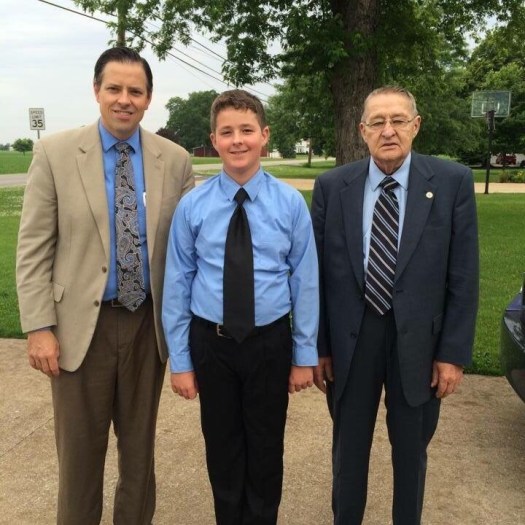
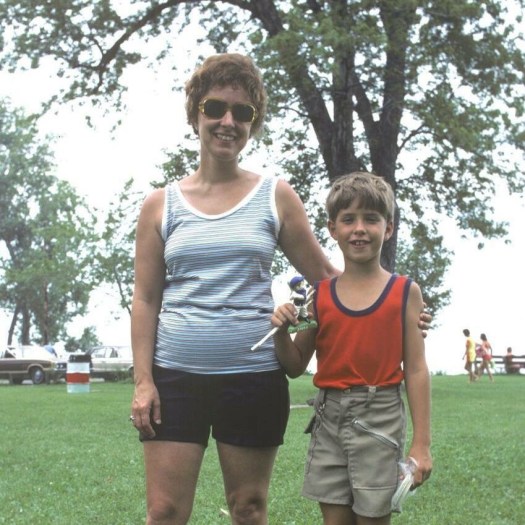
This is my 49th year as a son, my 18th year as dad, and my 4th year without my dad. While I don’t remember the day I was born, I remember the day I became a dad and the day I lost my dad. I remember standing in the delivery room as a baby boy entered the world, let out a cry, and changed my life forever. I also remember the day I held my dad’s hand, told him I loved him, and watched him take his last breath.

Fatherhood is not about overpriced greeting cards, a cookout, or a tie. Unfortunately, our consumer culture has seemed to transform the celebration of dads into another reason to spend money.

Fatherhood is a messy, challenging, fulfilling, and wonderful journey. It calls us to face our weaknesses and embrace our fears. It forces us to look inside ourselves and think deeply about who we are. I have learned that much of how my son thinks, speaks, and acts has been shaped by me. Looking back on my life, I know the same is true for my dad and me.

This means it all can get passed down, the good and the bad, the beautiful and the ugly. For every quick-witted joke, there can be words delivered without gentleness. Acts of compassion may be accompanied by flashes of impatience. Love for knowledge is tempered by addiction to technology.

I don’t pretend to think I’ve done it all right. I look back and see plenty of places where I dropped the ball as a dad. Things I should have said and done and things I shouldn’t have. Behaviors and attitudes I wish I hadn’t passed on, and others that make me proud.

We are all products of our parents and, for those of us who are parents, our children are products of us. This captures the beauty and fear found in fatherhood; you have a profound impact on who your child becomes.

As I look back over my journey as a son and father, I see joy and sorrow, goodness and brokenness. I see places where struggles and strengths have been handed down.

This requires us to turn to grace. Grace for our dads where they fell short. Dads, grace for ourselves where we’ve screwed up. And grace for our children as they sort out this adventure called life.

I must remind myself constantly that many of the things my son does that drive me crazy, he might well have learned from me. I’m sure that this same correlation is true between my dad and me. When we can embrace the fact that we are all broken, we can find a little more patience, show a little more kindness, and exhibit the kind of love we wish we could show every day.

Fine wine

I have struggled with feeling unworthy and unlovable most of my life (I’ll tackle that topic in future posts). This unworthiness often causes patience to erode quickly. Over the last few years this revelation has helped me learn why I’ve always been so impatient.

These last few weeks, my patience has been tested as I have faced unworthiness dead in the face. The voices shouting inside my head, telling me over and over I’m never enough…

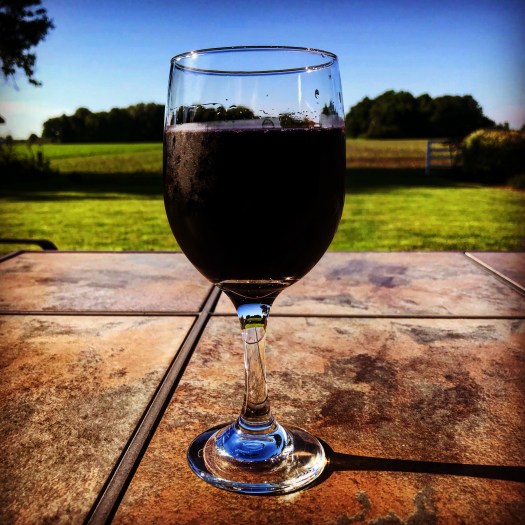
In 1 Kings 19, the Lord appears to Elijah, not as a wind, an earthquake, or a fire, but rather, as a gentle whisper. This week, in the midst of the winds, earthquakes, and fires in my mind, the Lord spoke quietly… through a glass of wine.

It got me thinking about how fine wine is made:
It must be allowed to ferment.
It requires time to age.
Pop the cork too early and you may miss out on the rich flavor.

Life, like wine, can be rich and wonderful, but it requires patience.

I must be patient with myself, never forgetting I am work in progress, a broken, weary traveler on this journey called life. Healing from years of difficulty will not come overnight.

I must be patient with others. They too are broken, weary travelers. They have also experienced pain, grief, loss, and a host of other challenges. Their healing will not come overnight either.

I must be patient with the process. Like making fine wine, life often takes time. It calls us to stop trying to hustle and be still. To listen for the still, small voice in the silence. To wait.

We don’t always know what the wine will taste like when we pop the cork, but if the ingredients are of high quality, the waiting is worth it.

I still struggle with feeling unworthy and unlovable, but this week, in the midst of a storm, that whispering voice reminded me that a rich life cannot be hustled. Like fine wine, it must slowly and patiently be prepared until the time it can be poured out and enjoyed.

Space invaders

Space, the final frontier… These words of Captain James T. Kirk were heard at the start of every episode of Star Trek. In the years since that show premiered, humans have gone into space, walked on the moon, visited Mars, and sent probes to the edges of the solar system.

As technology has taken us into space as explorers, techonology has also invaded our space.

When was the last time you went out to dinner, sat at a social gathering, or went pretty much anywhere else where there weren’t at least a few people with necks bent down, peering into a small box in their hand?

Confession time: I am often the one doing the peering.

Before it seems I am yet another person bemoaning the evils of smartphones, let’s be fair. There are many benefits of this technology. How else would I be able to figure out whether someone is saying Laurel or Yanny?

Seriously though, there are benefits to smart phones. Lives have been saved, people have made positive contributions to the world, and much good has been done thanks to these advances in technology.

But like most things, it has a dark side, an underbelly we often ignore, refuse to acknowledge, or simply don’t care about.

One of our biggest threats is the elimination of space. Not necessarily physical space, but emotional, mental, relational, and spiritual space. The places where intimacy, vulnerability, and reflection do their greatest work.

If I am busy scrolling down my news feed, I can ignore the feelings of regret, shame, anger, and disappointment.

If I am texting whoever I can think of, I am neglecting my ability to embrace solitude due to my fear of loneliness.

If I am checking email, I can bury those emotions I just want to forget.

If I am playing a game, I can rob myself of time to unleash my own imagination and creativity.

When these things invade our space, they invade our humanity. I am not trying to blame all school violence on smartphones, but, how much anger has been built up and undealt with due to disconnectedness? How many people have been ignored, excluded, or forced to hide their feelings until it is too late? (This is not a post about gun violence in schools; this is simply one example that comes to mind.)

How many people struggle with depression, anger, disillusionment, and a host of other problems at least partially due to the invasion of our space, those gaps where when we can reflect on and face the things we don’t want to talk about?

I invite you to join me. Starting today I am going to be more intentional about taking back my space. When I come home, my phone is coming out of my pocket and going somewhere away from my body. I am turning off almost every notification. When I go to dinner, visit friends, or attend other social gatherings, I will leave my phone in the car unless I have a specific reason to take it.

Allowing my space to be invaded has made my journey of healing more difficult. It has often fueled anxiety, empowered depression, and instigated anger and impatience. No more. Today, I am taking back space, the final frontier of my peace.

Mother’s Day…a bouquet of emotions

Where one person finds a table filled with smiles, cards, and flowers, another may find a table with an empty seat.
Where one person encounters a warm embrace and an abundance of fond memories, another may encounter dysfunction and pain.

Where one person discovers a new joy and fulfillment, another may discover loss and disillusionment.

Mother’s Day is a holiday made for Hallmark. Movies with happy endings, lots of greeting cards, and flower, gifts, and gatherings. But the reality is for many, this day is nothing like that.

I am thankful we set aside a day every year to thank moms for all they do for us. I hope this is something we do every day, but it is good to make a special effort every year to celebrate so many good things about mothers.

But we can never forget that for many this day is anything but happy. Mothers lost to death. Women unable to conceive. Dysfunctional mothers. Abortions and miscarriages. Abusive mothers. Women who have lost a child of any age. Unresolved issues that haunt families. Hurt upon which this day can feel like salt poured on a wound.

So today, let’s absolutely celebrate moms and the many ways they have been a blessing. But let’s also be tender and compassionate towards those who find pain, regret, and sorrow in this day. Like a bouquet of flowers, the beautiful blooms on top may be disguising some painful thorns just out of sight.

Kingdom building

I drive around north central Ohio for my job, logging hundreds of miles a week. Recently, I have noticed a new trend – people with yard signs for their church.
I understand the importance of spreading the message of the kingdom of God. But these signs raise a question for me: what kingdom are they trying to build?

It seems people might be more concerned with promoting their church than the Kingdom. I will be the first to admit we cannot fully know people’s hearts and must exercise caution when evaluating motives, but what is the intent of these signs?

This is what I “hear” when I encounter them: My church is better than the church down the street. Consume our religious product because it’s more appealing.

I also wonder who is the audience for these signs. Some would argue these are to attract people who don’t go to church. But does a yard sign promoting one specific church encourage someone who hasn’t been to church in years – or ever – to get up on a Sunday morning and venture into this strange land of “church.” I fear that more often than not, these signs result in church swapping rather than Kingdom growth.

This is not to deny that someone may visit because of these signs or that they are wrong. They just don’t sit right with me.

I am more concerned with people experiencing the Kingdom of God than convincing them to visit a kingdom on the corner of First and Main. I would rather they encounter the love of I AM by being extended grace and mercy in the community than sitting in an hour long service.

I write these words acknowleding there is power in the gathering of God’s people. There is extreme value of belonging to a community where people can be honest, vulnerable, and loving.

The concern is that attempts like these signs potentially water down our message and our mission. They might cause us to focus on building the wrong kingdom. And in the process, we might become more focused on who is coming to our church instead of how our church is going out into the world to restore Shalom to all of creation.

Holding death’s hand

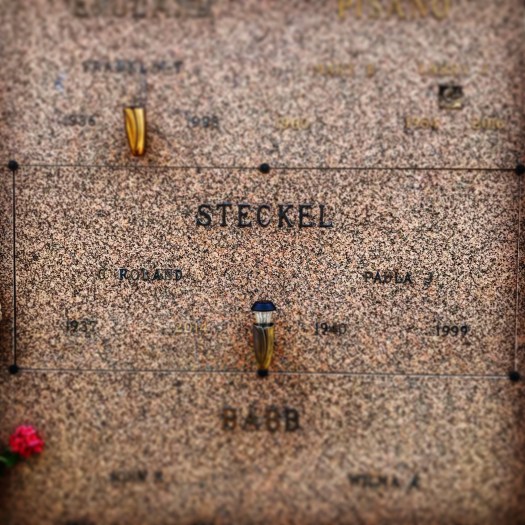
On this day nineteen years ago, I received a phone call that would change the rest of my life. My dad called telling me my mom had been killed in a car accident less than a mile from home, the place where I type these words today.

Until that day, death had always been more distant. I lost grandparents, aunts, uncles, and others. But that day, it was the day death took up residence in my home. No visit home would be the same. No phone call would find her voice on the other end. The woman in whose womb I grew and from who was I born was gone.

Death was much more present from that day forward. While driving I would often think about someone hitting me. Death found itself on my mind more than ever. Fear, fear of death and suffering, was a constant companion.

During my years in full-time minstry, death continued to take up residence. A mother of four dying from a brain tumor while her children were still relatively young. A worship leader’s unexpected death from an unforseen heart issue leaving behind his wife and three children, one of them yet to be born. A youth group member killed in a tragic car accident and the memory seared into my mind of standing next to the parents as they received the news. A child killed while sleding when he was hit by a truck. The death of my brother-in-law from a heart attack, right in front of his wife and children.

These are certainly not all of my encounters with death, but most of the deaths above occurred in a relatively short period of time, driving me into a depression I told no one about for quite some time.

I subscribed to our American narrative about death. You know the one. We don’t like death. We talk about it as little as necessary. We leave it up to professionals to deal with things like handling the corpse, dressing the body, and preparing it for a proper viewing. We like death as clean as possible.

I believe this is part of the reason we worship youth, health, and medicine in our culture. We want to be young forever, aging serving as a reminder of our mortality. I think it’s one reason we place our elderly in nursing homes. We strive to be healthy, telling ourselves the lie that if we stay healthy, we can cheat death. I am not opposed to taking care of our bodies, but not for the wrong reasons. We often believe the medical profession will save us from death, contributing to our nation spending countless dollars to extend life a few weeks or months, regardless of the quality of that life, seemly to prove that we can beat death.

The reality is, death is unavoidable, an integral part of life.

My relationship with death has shifted from fear to embrace over the last three years, starting December 5, 2014. On that day, shortly after 11:00 in the morning, I stood next to my father, told him I loved him, held his hand, and witnessed his last breath. For the next few hours, I sat there with my dad’s body as family members stopped by.

I slept in the room with my dad the night before, waking several times to look at his body, weary from the cancer that had overtaken him.

Holding my dad’s hand that morning, I was holding death’s hand, too. My journey with death took a turn that morning. The fear exascerbated by my mom’s tragic car accident was overcome by the peace in the moment my dad’s body stopped working. It was a sacred moment.

Since my dad’s death, I have learned to embrace death. Not a desire to die, but no longer a fear of death. Over the last three years, my dad’s death has served as a catalyst, freeing me to face fears that paralyzed and haunted me for years.

Today, death walks with me every day. We hold hands and journey together. Every breath I take, one breath closer to my last. Every morning I awaken, one sunrise closer to my last sunset. Every moment, one step closer to my final moment of life.

This may sound morbid, but it’s actually quite the opposite. Walking hand in hand with death has removed the fear. I die a little every day, making the need to live even more critical. I don’t fear death anymore because my death will simply be the final step in a journey towards death that I walk every single day.

Between now and then, I will live. I will live the abundant life that Jesus speaks of. Death has taken much from me throughout my nearly five decades in this world, and I am sure death will take more before I die. But I will have the last laugh, for I am already holding death’s hand and am half a step ahead.