Carrying the cross

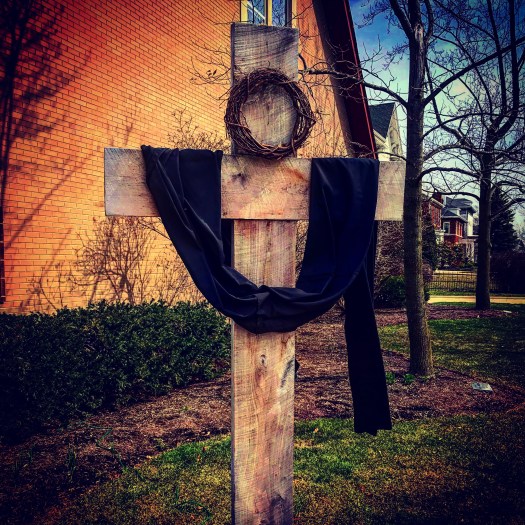
On Good Friday, I participated in a walk through Sandusky with a group of people from various churches in the area. We walked about a mile and half, stopping along the way to reflect on the words of Jesus from the cross and pray together.

During each leg of the walk, someone in the group had an opportunity to carry a full-size cross that we carried the entire mile and a half.

I was one of the people who carried the cross. While walking with the cross on my shoulder, I thought about how Jesus felt carrying his cross, envisioning how it must have been, treated as a criminal, walking to a sure and painful death.

His crime? Loving his neighbor. Standing up against the power structures of government, religion, and royalty. Punished for his unwillingness to play their games of control, power, coercion, and domination.

In a world where the outsider and outcast were exploited and excluded, Jesus feasted with, healed, and welcomed those the power structures sought to minimize.

But Jesus was more than a social reformer. He came to turn the world upside down and usher in the kingdom of God. To create a world where swords are turned into plowshares, enemies become neighbors, the last becomes first, and true power comes from humility and sacrifice.

For a few minutes on Friday, I experienced a little more palpably what Jesus felt on that lonely walk on a Friday two millennia ago. It was indeed a Good Friday, because it was the day I AM showed that overcoming sin is accomplished not by trying to be morally perfect, but by laying down your life, loving your neighbor, and forgiving even those that brutally murder you.

Refresh, remodel, or rebuild?

Foundation.JPG

This weekend I was at a home show, surrounded by dozens of vendors ranging from remodeling to roofing to windows, and more. It got me thinking about when we need to make changes to our lives.

Life, like a home, goes through various stages of decay and disarray.

When it comes to a home, there are times a simple refresh does the trick. A new coat of paint. Different décor. A good deep cleaning. Other homes require more significant work, such as a new roof, windows, or drywall. On some occasions, there may be extensive damage to the framework or other structural aspects where things need to be torn down to the foundation. Maybe even the foundation needs to be repaired.

When we encounter brokenness in our life, discerning the damage is vital as we begin the repair work. If we don’t, we may end up doing work that is overkill or not enough.

If our home needs new windows, we won’t tear the house down. If our lives need minor adjustments, we likely wouldn’t invest a significant amount of time working on it.

The greater threat is at the other end of the spectrum. If many of the 2×4’s in the frame of our house were rotting, we wouldn’t just slap another coat of paint on the walls. The same is true for our life. If our life calls for serious, deep work, we might need to tear things down to the foundation and rebuild.

Every life, like every home, needs repairs from time to time. Those who think we don’t are either naïve or living in denial. When those repairs needs to be done, we must be honest with ourselves about severity of the damage and what kind of work is required.

A house built on a damaged foundation will be unstable and everything built on top of it will be less sturdy. When you feel like your life becomes unsteady, it may be time to inspect your heart, mind, and soul, find the areas that need repair, and determine what steps you need to take next.

Regardless of what needs to be done, life is too short and too important to ignore the repairs we might be avoiding. Even if the task seems daunting, embarking on the journey will always be better in the long run than simply slapping on another coat of paint.

The stories we tell

Every day we awaken with a clean sheet of paper, a story waiting to be written. The page is blank, but the mind of the narrator is not.

Yes, today is another opportunity to write a new chapter, but the reality is the stories we have already heard and experienced shape the stories we tell ourselves. The pages that have already been written will impact the words we pen on today’s blank page.

What are the stories you tell yourself?

Most of us, if we are truly honest, have many stories we would rather not share.

Stories of failure.

Stories of being let down.

Stories of abuse.

Stories of betrayal.

Stories of abandonment.

Stories of addiction.

Stories of not being good enough.

These are stories we often bury beneath the surface, cover with facades of happiness, mask with plastic smiles, disguise with humor, and numb with unhealthy behaviors. Stories that fuel anger, shame, and anxiety. Stories that weigh us down and paralyze us, eating away at self-affirmation and the ability to love others. Poison to our souls.

What stories are you telling yourself?

Changing the stories we tell ourselves requires us to stand and face the stories we have been exposed to throughout our lives. We must rumble with the ugly parts of our lives hidden in the basement, inviting them into the light to take away their power.

Once these stories are exposed, we have freedom to write new stories. No longer do we need to fear the basement. Open wounds become scars and past hurts become lessons.

But let’s be honest, this does not elimate the pain; grief will be our constant companion. We grieve words unspoken to those who are gone. We grieve moments that have cut us deeply. We grieve lost opportunities and stolen childhoods. We grieve broken relationships and past mistakes. We grieve ways that others hurt us and we hurt others.

Telling yourself new stories isn’t about ignoring the past, but embracing the past while simultaneously turning the page in the present. Telling yourself new stories means seeing the past in a new light, from a different vantage point. We can be freed from the toxins of the past while never forgetting the lessons learned.

Facing the past leads to a better future. Seek to learn and grow from stories already written. This will not be easy or painless; the journey can be excruciating. The path to healing and growth often leads us through some of the darkest places we have ever been. But remember, only when we have been through the darkness can we most appreciate the light, the light that offers a fresh page and an opporunity to tell yourself a better story.

Questions

Discussing parenting this weekend with a friend reminded me of something important. Our role as parents evolves over time. When our children are young, our primary role is answer giver, providing information and direction for our children. We make more statements than ask questions. Don’t touch that hot stove. Don’t walk into the street. Do your homework. Obey your parents. If you’re a parent, you know this only touches the surface.

As children mature, our role should change. Statements should evolve into questions. Giving information should transform into offering advice. Holding children close should change into letting them go.

Most parents, if we are honest, struggle with this transition. We want to keep telling our children what to do. We want to protect them from the dangers of life. We want them to be who we want them to be.

But the reality is, they are not us. They are themselves. They are different than we are. They may have different values, different opinions, and different behaviors. As we begin to see our children become their own people, we need to change our approach. If we continue to focus on making statements, giving information, and holding them close, we can retard their growth, frustrate ourselves, and take ownership of something that is not ours.

Evolution and change are part of life. They involve risk for sure. But they also offer opportunities for improvement. Our children have the possibility of being better than us, but that becomes more difficult when we seek to constrain them.

This is not an easy process. We will all blow it. Sometimes we will let go too quickly and other times we hold on too long. We are imperfect human beings seeking to help other imperfect human beings find themselves.

These last few weeks as I have watched students protest following a school shooting, I noticed a few things. Sometimes, we don’t offer enough guidance and other times we create too many restraints. I witnessed people on one side of the issue applauding these young people without seeming to challenge them to think more deeply. On the other side, I saw people belittle these young people, saying they have no idea what they are talking about.

What if, rather than either extreme, we all sat around a table and challenged opinions while also encouraging efforts? What if, instead of making statement to and about these students, we asked questions to engage in dialogue about the deeper issues at hand?

We need grace for each other and for our children. We must grant them the freedom to make mistakes, while maintaining an open posture to ask questions when the opportunity avails itself. Too often, I see parents try to protect their children from the world far too late into their lives, and in the process they often help create young legalists or set them up for ugly falls.

When we find that middle ground where dialogue and questions offer young people a chance to think for themselves while also remaining open to learning from our wisdom, experience, and mistakes, we will create an environment for growth. Our questions will then help the next generation find its own answers. This is going to happen anyway. Wouldn’t it be better if we served more as a help than a hindrance?

Breathing

Have you ever watched clouds? I find relaxation, especially when it’s warmer, from laying on my back looking up at the clouds. They are always in motion, always changing.

Quick science lesson. Clouds consist of tiny droplets of water attached to something, often particles of dust. As the wind blows, these droplets gather together forming various shapes.

The Kingdom of heaven is like a cloud…

You and I are particles of dust, and when the living water attaches to us, we become more than we were before. We have life and form, and as the wind of the Spirit moves through us and around us, we gather together and the Kingdom expands.

The creation account in Genisis says that I AM breathed the breath of life into the dust and life emerged. Maybe this is the essence of I AM. Breath. Wind.

We often think of God as three people. The Father, a guy with a white beard sitting on a throne. Jesus, the human form of the divine. The Holy Spirit, which we’re not not always sure how to define. Does this blind us to something much deeper and mysterious.

Could it be that these three “persons” of the Trinity are just clouds, tangible representations of something beyond our comprehension? Sometimes I worry that our need for certainty and nice tidy explanations limits our understanding of I AM.

Is breath the essence of I AM? I admit I am not a Hebrew scholar. I know very little Hebrew. But I heard something recently that got me thinking. Take a minute and try this… Take a few deep, deliberate breaths. When you breath in, say “Yah,” and when you breath out say “weh.” Yah-weh. Yah-weh. I’m not sure if this is the “right” pronouncation for YHWH, but I find it fascinating when the word is sounded out this way. It almost sounds like breathing.

This past Wednesday in my yoga class, our focus was on breathing. For over an hour, my attention was continually on my breath. As the evening went on, I was reminded of how important breathing is – without it we die – and how often we take it for granted.

How often do we take the movement of I AM for granted as well? I believe that we need to think less of I AM as static and definable and more as dynamic and beyond understanding. When we embrace mystery and contemplate the vastness of creation and Creator, our eyes can be opened to a new level of consiousness.

When I was younger, we often watched The Sound of Music. It was one of my mom’s favorite movies. There is a song in the movie that says, “How do you solve a problem like Maria? How do you catch a cloud and pin it down?” What if we approached I AM more like a cloud and less like something we can measure and define? Has our need to be right contributed to the violence, termoil, and pain in the world? Would our eyes be more open if we could allow ourselves to be engulfed in the cloud?

The next time you breath, take a look at the sky, watch the clouds for a few minutes, and open yourself to the movement of the breath that gives life to the world.

Instruments

I spent the day at the Lorain County Solo & Ensemble Contest listening to students play music and adjucators provide feedback. When students were offered tips for improvement, many comments focused on breathing, posture, and expressing the mood of the music. It was clear that most students knew the music and simply trying to play better wasn’t the answer.

In life, most of us know what good behavior looks like. Whether we turn to the Bible, another religious text, a set of laws, or general morality, most humans develop some idea of what it means to be good.

When we fall short in our behavior, many of us simply try acting better. Unfortunately, this often results in short-lived changes and fairly ineffective efforts.

In the story of the Rich Young Man in the Bible, Jesus encounters a man who is focused on trying to act better…

Just then a man came up to Jesus and asked, “Teacher, what good thing must I do to get eternal life?”

“Why do you ask me about what is good?” Jesus replied. “There is only One who is good. If you want to enter life, keep the commandments.”

“Which ones?” he inquired.

Jesus replied, “‘You shall not murder, you shall not commit adultery, you shall not steal, you shall not give false testimony, honor your father and mother,’ and ‘love your neighbor as yourself.’”

“All these I have kept,” the young man said. “What do I still lack?”

Jesus answered, “If you want to be perfect, go, sell your possessions and give to the poor, and you will have treasure in heaven. Then come, follow me.”

When the young man heard this, he went away sad, because he had great wealth.

-Matthew 19:16-22

This man focuses on the music his life produces, but Jesus challenges him to think more deeply. While Jesus offers a call to action, he is getting at something even more fundamental. Like many stories in the Bible, this one contains multiple layers. True, it addresses wealth, but if we look more closely, we uncover something even more profound.

Jesus is calling this man to change his thoughts.

While we don’t know how he gained his wealth, since he is young I feel safe assuming the man either inherited it or comes from a wealthy family. He has likely spent most of his life viewing his idenity through wealth and status. His environment shaped him to picture his wealth as an integral part of who he is.

He can barely imagine life without his possessions. When Jesus presses him on the issue, he walks away, overcome with sadness.

The word translated “perfect” in this story could also be translated “made complete.” This story is not about achieving some level of moral perfection; rather, it is about finding wholeness.

This young man likely trusted in wealth for his identity. However, before we throw stones, we should look in the mirror. We may not depend on wealth, but how many of us ask social status, reputation, relationships, addiction, our number of friends on Facebook, or a host of other issues to provide the same thing?

What if changing our behavior isn’t about trying harder, but getting to the core issues of our experiences, our environment, our thoughts, and our moods, all of which shape the way we act.

It’s not significantly different from the instructions I heard from adjudicators today. Producing better music from an instrument requires a musician to breath well, have good posture, and use the right techniques. The result can be something beautiful.

If our desire is to become instruments producing beautiful music in our lives, focusing on our experiences, environment, thoughts, and moods can make it possible for our behavior to change from the inside out.

The Rich Young Man didn’t just need to sell his possessions. He needed to change what possessed him on the inside, enabling him to become more complete. What possesses you, holding you back from being whole?

Beneath the surface

I love living by a lake. Toes in the sand. Waves lapping at my ankles. Sounds of wind and water. But in winter, those experiences go away, hidden under ice.

Some people’s lives go through similar transitions. From alive and joyful to cold and frozen. The cold winter winds of life creating a layer of ice on the surface. Ice that can be smooth and reflective or ice that is rigid and sharp. One often looks like everything is ok, still creating a cold shell. The other lashes out, boldly exhibiting the pain.

Underneath water still flows. Although chilly, life still remains below. Not all is lost; it’s simply hidden beneath the surface.

If you experience someone in a season of winter in their life, how can you help break through the ice? By grabbing a pick and chucking away, hoping to break through the surface? Or by providing a warm spring breeze? While a pick can be effective, the work is hard and often damaging to the person on the other end. Proceed with caution when considering this method.

The better method is typically a warm breeze. Words of encouragement. Acts of mercy and compassion. Presence. These often thaw even the most challenging ice.

But beware. You will not be able to thaw every icy lake you encounter. For some, the timing may not be good. For others, you may not be the right person to bring the breeze. Remember it is not any one person’s responsibility to help everyone. Sometimes, you will need to walk away, knowing this work belongs to another.

If you’re reading this as a frozen lake, you may feel no one can thaw the ice. Rest assured spring is coming. Maybe not as soon or as quickly as you would like, but a warm breeze will arrive, often from a direction you never expected.

Regardless of which side of the ice you find yourself today, remember there is always life beneath the surface, no matter how thick the ice. In that, we can all find hope.

Bridges

Bridges

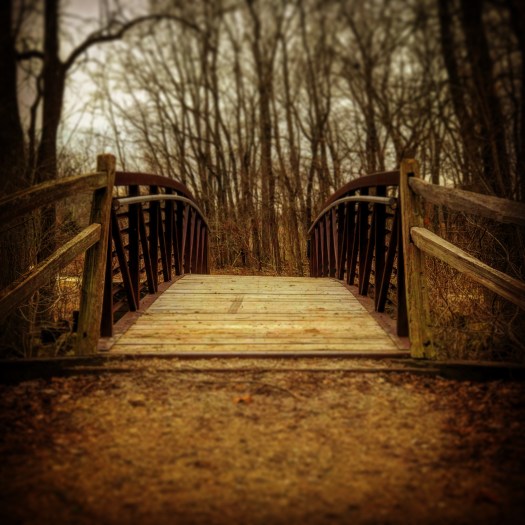
Recently I was enjoying a walk in nature when I came across this bridge. This was somewhere I had never been before and wondered what was on the other side. Beyond this bridge was unknown territory waiting to be discovered.

Every day, every moment, we stand before bridges in our life. We are faced with decisions whether to cross or not. Decisions as simple as which route to take to work, what to have for breakfast, or whether or not to call a friend. Some decisions may have more significant meaning for our lives. Do I accept this new job? Do I call that friend that hurt me? Do I say those words in anger one more time? Do I repeat that same bad habit again?

The difference between the bridge I came across on that trail and bridges we face in life is once we cross life bridges, we can’t go back. Every moment is a bridge. Every decision a crossing. Each determining the next path in this journey called life.

If you will, excuse me for a moment as we stop along the path for a brief theological reflection. Does I AM know the future? People have debated this for thousands of years. Recently, I heard an explanation that really resonated with me. What if I AM doesn’t know the future, but due to I AM’s infinite wisdom, I AM knows every possible bridge that lies on the other side of the bridge before us? What if every possible outcome of this next decision is in the mind of I AM? And every possible outcome of the next decision? And so on. It is mind-blowing, but also reassuring.

I have always struggled with the idea of I AM knowing my future. It conflicts with free will. It seems controlling and predetermined. But, if I AM knows every possible bridge I will ever face, then there is wisdom to be gleaned from listening.

Thank for the brief stop on our walk. Let’s return to the bridge.

Today, you will face an untold number of bridges. Which ones do you cross and which do you pass? How do we know what is the “right” one to choose. The reality is there is no one right bridge. But, and this is where wisdom comes into play, there are better bridges than others.

Unfortunately, we – unlike I AM – cannot see every potential bridge on the other side. However, we can make better decisions when we listen. Listen to I AM. Listen to our experience. Listen to others. Listen.

Sometimes – more often than I care to admit – I make decisions without listening. I rush to cross a bridge before considering what bridges might be on the other side. And while I often get frustrated with myself, I also have to offer myself grace and remember that even on the other side of the bridge there will be bridges that lead to better paths.

One of the best ways to choose the better bridge next time is to learn from the bridges we have already crossed. But we shouldn’t waste our energy wishing we could go back. That moment, that decision, is etched in history. The only real choice we have today is to consider the bridges before us and cross the better ones.

Making jazz music

Jazz

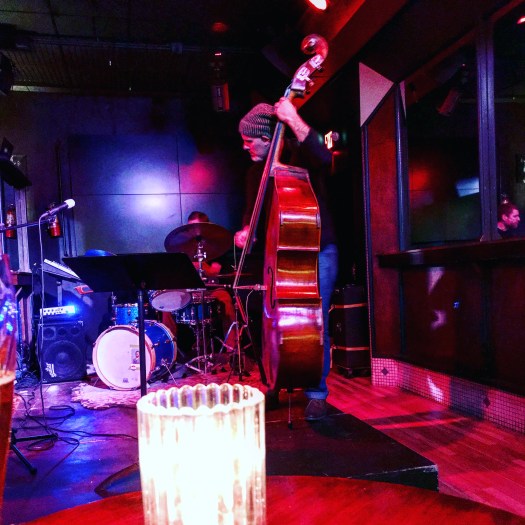
Last week I visited Madison, Wisconsin for a few days and during the trip had the opportunity to experience some live music. One of the evenings featured a jazz trio. They took turns improvising and creating beautiful and unique music. They obviously have played together before and were comfortable going off each other’s leads. Throughout their performance, I found myself immersed in the music, forgetting each individual’s instrument until one of them began playing a solo.

Watching and listening to them playing together served as an image of the I AM. Father, Son, and Holy Spirit, three but one.

This jazz trio provided a visual of how I AM has unity within community. Each of the three musicians that evening knew their part, but also knew the abilites of the others. They trusted each other and enjoyed the others’ time in the limelight. They didn’t co-opt another musician’s solo, but complimented it with complimenting rhythms and harmonies.

Throughout the Bible we find moments where each of the three are featured. The Father serves as the dominant voice thoughout the Elder Testament, interacting with patriarchs, nations, prophets, and priests. Throughout the Gospels, the Son – the incarnation of the I AM – moves to the forefront, displaying what it means to be fully human. The remainder of the Younger Testament features the work of the Holy Spirit – the wind and breath of the I AM. But never are any of them silent. From Genesis to Revelation, these three move together, creating beauty, redeeming Creation, and constantly working to restore Shalom.

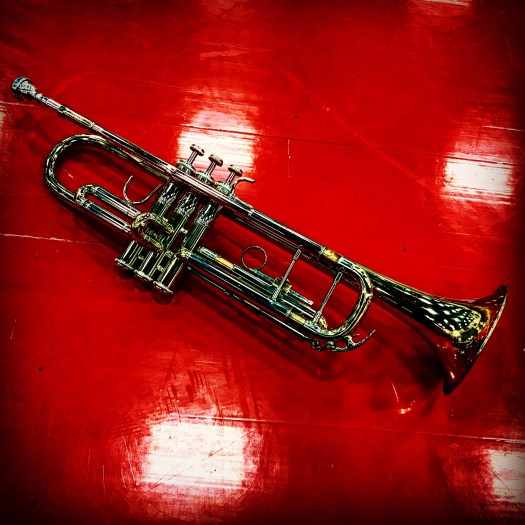
Later in the show, these three musicians invited others to come to the stage and play with them, helping create music, something new that has never been played before. I AM invites each of us – and all of creation – to join them in the art of creating beauty, redeeming Creation, and constantly working to restore Shalom. We are not called to be audience members, waiting to see which song is next. We are welcomed to the stage, offered an instrument, and blessed to help make the world a better place, not according to some formula or set of rules, but rather – like good jazz – to engage our uniqueness, release our creativity, and partner with the trio who started this song in the beginning.

Rings of life

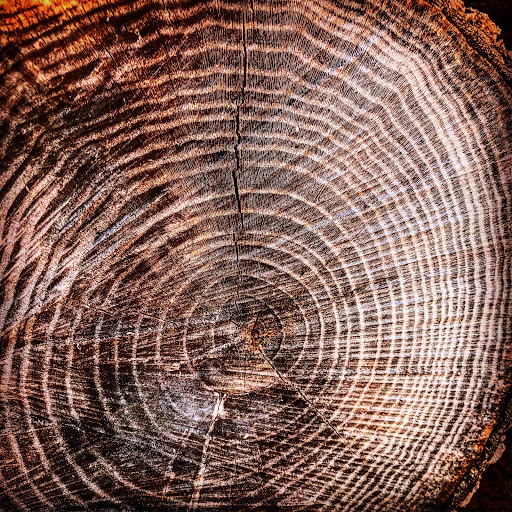
Have you ever looked at a log and thought about the growth rings? What causes some to be darker than others? Why are some thicker and others thinner? Why do some areas seem smooth and others bumpy?
Without getting into the nerdy science bits, there are a number of things that affect those rings. The temperature. The amount of rain. Potential abuse to the tree. There are numerous factors impacting the growth rings that develop over the years. Rings which determine the strength, shape, and size of the tree as it grows.

What shapes the growth rings in our lives?

This week I spoke to a friend whose daughter lost her best friend in a tragic car accident. While I cannot directly relate to her experience, discussing this situation reminded me of my mom’s death in a car accident almost 19 years ago.
I imagine that in this moment, that young lady can’t picture the rest of her life without this friend. I am sure they spent countless hours together and her unexpected death has created a huge hole in her life. I have struggled over the last few days about what to say. I am so weary of the standard fare people offer. “She is in a better place.” “God needed her more than we do.” Those kind of responses are what I call theological BS and are often sincere attempts to explain something that cannot be explained.

So as I have wrestled with what to say, for now I know there is little to say. In the moments and days following a loss like this, the best thing to do is be present. This requires us to embrace the uncomfortable silence and focus on being instead of saying or doing.
But when the time is right, this is what I think I would say to this grieving young lady…

Every year, every day, every moment is a season. In those seasons people will come and go. They may be very close to us today but far less present or even absent in the future. When this happens in the natural ebbs and flows of life we often barely notice it. But when it happens in an instant, outside the realm of natural progression, it hurts like hell. It cuts us deeply and leaves us feeling hopeless and helpless. It causes us to question what we believe and often results in anger towards God, other people, and even ourselves.
Reflecting on the nineteen years since my mom’s death, the three years since my dad’s death, and a number of other tragic deaths I have experienced, I have learned this…

Like a tree, we have rings of growth that develop throughout our life. Some are smooth and thick. Other have bumps and are thinner. The experiences of our life determine what those rings look like and how they strengthen and shape us as we grow.
What I would want to tell this you is that you will always have a scar in this growth ring. You will never completely forget the pain of a friend ripped away far too young. You will always remember her and the impact she had on your life.
But I also have experienced that over time you will focus less on the pain and scars and more on the strength your friend brought you in the rings proceeding the scar. You will rejoice in the memories as you grieve the shared moments you never had a chance to experience. You will laugh as you cry. And you will be thankful for the ways this friend impacted your life while she was with you. You will learn that although no one will ever replace her, others will come into your life to offer strength and shape to the growth rings that you have not yet developed. Your friend may no longer stand beside you, but her impact will always live within you.