The space between the notes

img_1487

In a recent meeting with my spiritual director, the idea of noise came up. Not physical noise, but spiritual and emotional noise, the kind of internal commotion keeping you up at night or plaguing your mind during the day, making it more challenging to hear the small, still voice of the divine.

That noise can be more dissonant than Stravinsky’s The Rite of Spring and invites distractions and disruptions, sounds that can be unbearable at times. Amid the noise, it’s not that the small, still voice is absent; it’s simply hard to hear through the clutter.

The psalmist writes in Psalm 46 about sea waters roaring and foaming, mountains quaking, and nations in an uproar. In the midst of that noise, the psalmist writes, “He says, ‘Be still and know that I am God.’”

I don’t know what noises are clamoring around you or what dissonance pierces your thoughts. You may be in a time of relative peacefulness or overwhelmed to the point of despair. What I do know that is we all need to be still. Whether you consider yourself a follower of Jesus, a member of some other religious tribe, or one who doesn’t even believe in the divine, we all need silence at times.

Silence is scary. Sometimes we actually welcome the noise to drown out thoughts we would rather avoid, words of unworthiness, insufficiency, or shame. Beliefs that paralyze and terrify us.

But the silence is also where we find the small, still voice.

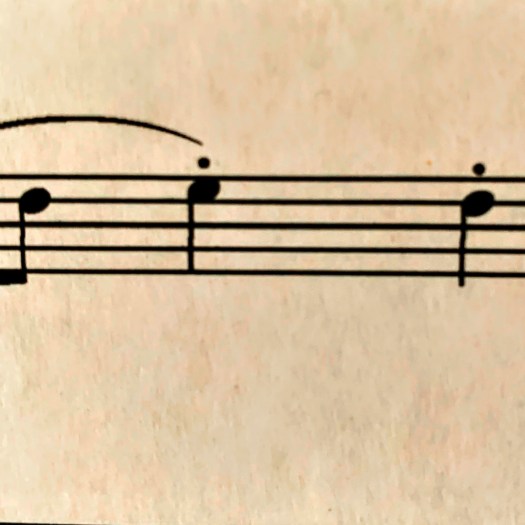
Returning to the conversation with my spiritual director, we were talking about this very thing. I mentioned needing to quiet the dissonant music of life to hear God’s melody. That’s when she said something which was equally simple and obvious as well as profound and deeply true. “Listen to the space between the notes.”

Listen to the space between the notes.

When Ezekiel encounters the Lord in 1 Kings 19, most translations say he hears something like a small, still voice or whisper. I am not a Hebrew scholar, but from what I have read, the best translation is more like “a sound of thin silence.”

So maybe our goal should not primarily be to hear a word from the divine, but rather to sit with the silence between the notes. Maybe that space between the notes is where we move beyond knowledge and truly experience the divine. We often want God to answer us, to give us a clear message. While there are times to seek this, the true depth of intimacy with the divine may be best experienced in the sound of thin silence, the space between the notes.
Walking Together

Walking

If you have spent much time on social media over the last few weeks (or ever), you have likely seen posts, shares, and the like advocating a certain stance, position, or opinion. During this time, when emotions are running high, many share, comment, or like something with little thought or reflection.

This behavior often reveals the fruit of seeds planted in our hearts and minds.

Confirmation bias runs rampant throughout our society, not just this week, but regularly. We listen to news channels supporting our views. We read books and articles supporting our views. We share posts supporting our views. We commiserate with people supporting our views. We comment on threads supporting our views.

While this phenomenon is not new, it has been front and center during this time of civil unrest. News feeds are filled with people sharing posts or making comments void of deliberation, a simple check of accuracy, or compassion. Yes, there are plenty of posts showing those things, but many are not. This tends to sharpen the animosity, widen the divide, and suffocate dialogue, often by turning a complex situation into a battle of black-and-white positions.

Unfortunately, both on social media and in face-to-face encounters, we can end up screaming at each other more than listening.

In my journey of self-discovery and healing, there have been many important lessons learned. One which applies to this current situation is: Until we learn to love even the most broken parts of who we are – both individually and collectively – we cannot find true, deep healing.

We must carefully avoid the trap of thinking because we believe our position is correct, we have all the right answers. Additionally, we cannot allow ourselves to think the other person is completely wrong.

Your views about a situation may be closest to the truth, but that doesn’t mean we still can’t learn something from those who disagree with us, regardless of how vehement that disagreement might be.

We must speak out for what we believe in, but how we voice our position can make all the difference.

Until we learn to listen more, open our minds, and speak less, fights will continue, one side’s screams provoking the other side’s scream, ad infinitum. Far too often those screams lead to violence.

There is no easy solution. This has been the way of the world throughout history; war, murder, and destruction serving witness to our inability to embrace this peaceful but challenging pathway.

My journey to internal peace includes embracing even the ugliest and most painful parts of my past, welcoming them to the light, and learning from them to move towards healing. It is not easy, but it offers tastes of Shalom.

Oh, that our world could begin moving past hatred, step into the tension, love their neighbors and enemies, and walk together toward the peace we all long for deep inside.

Not the answer

I weep this morning for our country as I awaken to what happened overnight…

Peaceful protests turned to violence and destruction, and buildings are burning.
Our President posted a tweet promoting violence.
A news crew was arrested for no apparent reason.

There appear to be people fighting violence with violence and retribution on every side. Escalating violence will not bring peace.

I weep for George Floyd and his family.
I weep for so many more whose names are not in the national news.
I weep for the racism in our nation.
I weep for the business owners and employees whose businesses have been destroyed.
I weep for the protesters whose message is being co-opted by looting and destruction.
I weep for the law enforcement officers who are are doing it right and find themselves caught in the middle.
I weep for those in law enforcement who abuse their power.
I weep for the atmosphere of violence and retribution that seems to be everywhere, from Pennsylvania Avenue to Minnehaha Avenue.

Violence is not the answer.

For several years, I spent a week in the inner-city where our group of teens and adults were the only Caucasians there. I will be the first to admit that I have not walked in the shoes of an African-American, but here’s what I learned in those times.

It doesn’t matter what color your skin is, how much money you make, or where you live, we all want respect, compassion, and love. The absence of those reverberates throughout our county and our world. It leads to murders, riots, and wars. It builds up anger and even hatred between groups. So when something like the death of George Floyd happens, all hell breaks loose.

We cannot be silent, but we must speak from a place of peace. That does not mean we are quiet or reserved, but that our efforts should not add to the escalation of violence. It doesn’t matter if you sit in the White House or you’re protesting.

Stand up. Speak out. Support your fellow human beings. Reject injustice. Fight racism or anything else that demeans another human being.

We are better than this. All of us are. I don’t have all the answers, but I don’t believe that violence – from any side – is the right answer.

The Big 5-0

Fifty.

This number can evoke different feelings depending on the context.

Fifty dollars. If you find it, it’s a blessing. If you lose it, it’s a curse.

Fifty feet. If you’re that far from a bear in the woods, you have a head start. If you’re that far from your car in a rainstorm, you’re likely getting soaked.

Fifty minutes. If you have that long until you have to go to work, the time will fly by. If you have that long until class is over, it feels like an eternity.

Fifty years.

This is the reality I face today.

18,263 days. 438,312 hours. 26,298,720 minutes. At 5:22 PM, on May 14, 2020, that’s how long I have been taking breaths and experiencing this world. That’s a lot of time.

But it’s also not much time at all. Scientists estimate the world is approximately 4.54 billion years old. That makes my 50 years 0.0000011013216% of the history of the world. Man, that’s a small percentage.

I am also one of over seven billion people alive right now on planet Earth. And one glance into the nighttime sky tells me that I am but a dust particle on a dust particle in the universe. This can make me seem fairly insignificant if I dwell on it.

But, as Paul Harvey used to say, this is the rest of the story.

I am significant. I am a child. I am a parent. I am a friend. To a handful of the seven billion people in this world, I am important. My love, my compassion, my life, they have meaning to those people. My choices, good or bad, impact those people’s lives.

After fifty years, I’ve learned I’m less important than I thought I was and more important than I believed I was. Living in this tension is the pathway to peace. I am both inconsequential and essential. I live in the divine and the divine lives in me. That reality grounds me and upholds me.

I don’t know how many minutes, hours, days, or years I have left. I could die tomorrow, or I could live another fifty years. This is the fragility and unpredictability of life. Every breath matters.

That does not mean every moment requires productivity or busyness. There is no reason to hustle to earn your worth. Rather, your value is primarily in your presence, not your productivity.

Be where you are. Be who you are.

This is no small feat. The world demands we earn our worth. The world, and even sometimes religion if we’re honest, teaches us that we must believe the right things, work hard, and be good to achieve value.

It has taken me nearly fifty years to learn this, but we are inherently good. We are loved, even when we are unlovable. We are forgiven, even when we make mistakes. When we can see beyond the flaws and brokenness and look deep inside ourselves, we can see this is the place where the divine dwells.

Our task in this life is not to try to be good enough, it is to uncover and unleash the goodness which already exists and share it with the world.

I (don’t) care

4efcb4cb-d191-4ea2-ac95-94ca6ecc7a3f

The way to life is through death; this is the paradox of death and resurrection, the gift of surrender.

One key part of surrender is learning to not care what people think. When we no longer care, we are truly free to care. This does not mean we obtain a self-absorbed, cavalier attitude of not having regard for others. It means we stop allowing the opinions of other to paralyze us. This is not an easy, and my failure rate is high.

I often invest too much energy focusing on what people think. While I may not be as self-conscious as I one was, my ego still has a foothold. My ego’s leash has grown longer through experience and effort, but it’s still there, holding the leash, waiting to pull me back.

The Greek Stoic philosopher Epictetus said, “If you want to improve, be content to be thought foolish and stupid with regard to external things. Don’t wish to be thought to know anything; and even if you appear to be somebody important to others, distrust yourself. For, it is difficult to both keep your faculty of choice in a state conformable to nature, and at the same time acquire external things. But while you are careful about the one, you must of necessity neglect the other.”

I agree with the essence of his words. When we invest energy on gaining external things, we naturally will neglect our internal essence, our True Self.

The more I consider the life of Jesus, the more I admire his freedom. He didn’t care what other people thought and this freed him to care even more for other people. It freed him to stand up to the authorities, but with love rather than violence. It freed him to show and speak life to those who were the most ignored or marginalized, even when he was mocked and judged. It freed him to be true to his True Self, the divine nature dwelling within him. There was an immense freedom displayed throughout his life; Jesus was free to be true to himself and the world.

Obviously, there are many differences between Jesus’s life and ours, lives marked by brokenness and shortcomings. But our past is just that, the past. All we can do is change this moment, seek freedom in this moment. While scary and painful at times, we must focus on today. Not the past. Not the future. Today, this moment. We must die to our ego so we can truly live.

Waiting…

Between Good Friday and Easter Sunday lies Holy Saturday – a day of waiting.
Most people don’t like waiting. We don’t do well with sitting in limbo.

But that’s what Holy Saturday really is. Limbo. A day between death and new life, between suffering and salvation.

While it’s one day on the church calendar each year, it is an archetype of our life, or at least seasons of life. It is a reminder periods of waiting often reside between death and new life.

I think about this when I take walks at a local nature preserve in the winter and see the barren trees, the crumbling leaves, and the silence of animals waiting for spring.

I think about this when children grow up and leave home, and parents long to become grandparents and hold an infant once again.

I think about this when a relationship falls apart, and someone wonders if they will be alone forever.

I think about this when I hear of friends having a miscarriage and hoping for the chance to try again.

I think about this when I watch TV reports of millions of people in our nation who suddenly lost their jobs due to COVID-19 and await unemployment benefits and possibly an opportunity to return to work.

We don’t like to wait.

Our world is stuck in a global Saturday right now, awaiting the moment when things return to some level of normalcy. But let’s be honest, things will never be the same.

My grandparents were impacted for the rest of their lives by the Great Depression.

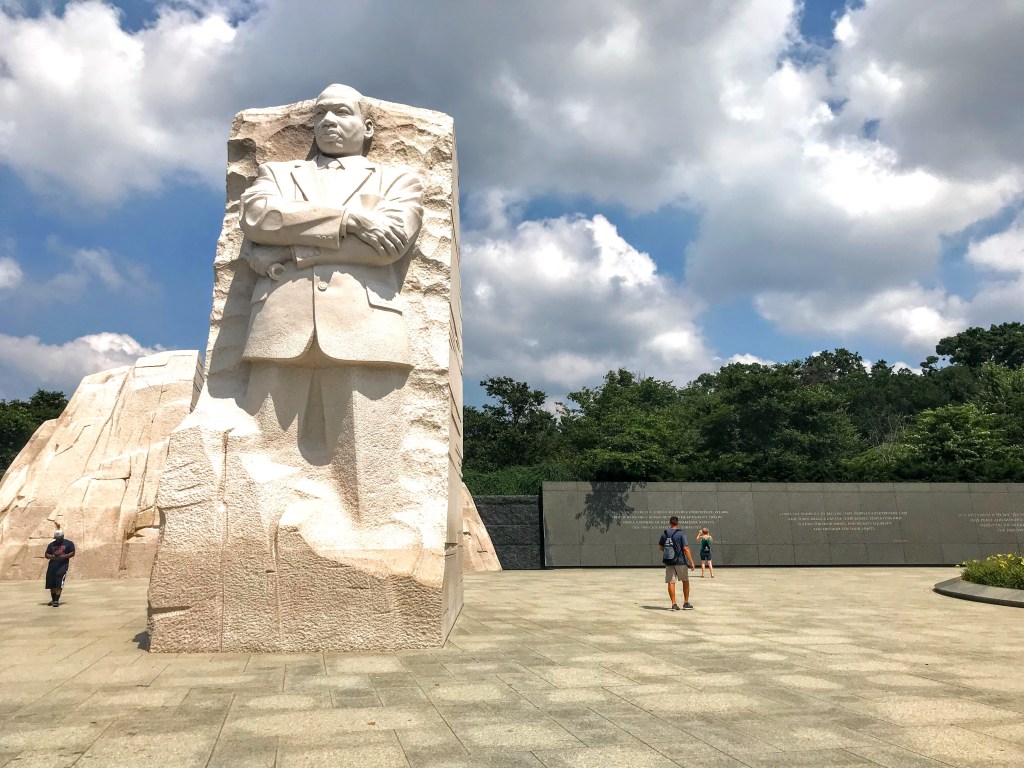
Our nation was different after the assassinations of JFK, Martin Luther King, Jr, and Robert Kennedy.

Most of us likely never watched a shuttle launch the same after the explosion of the Challenger.

So much changed in our world, especially in the United States, after 9/11.

Our world will not be the same after COVID-19.

But what are we doing while we wait? Will we grieve what we have lost or hope for new life? Will we allow ourselves to be changed? That is the question of Holy Saturday, and it is the question we face today as a world.

Holy Saturday reminds us that we must learn to live in the tension of death and new life, suffering and resurrection. We are all suffering grief in some way during this time of waiting. Grief has countless faces and reveals itself in a host of emotions and behaviors, not all of them healthy or helpful.

But one common experience we share is waiting. In waiting, we shouldn’t just drown out our pain with Netflix or act with hatred towards those we disagree with or discount the impact on the most vulnerable among us. Our common suffering should draw us closer, not tear us apart.

For some people, COVID-19 disrupted lives we felt we had control over. Retirement portfolios experiencing significant growth. Successful careers and businesses. Lives that seemed to be humming along.

For others, COVID-19 exacerbated already present struggles. Not enough income to make ends meet. Living paycheck to paycheck. Insufficient health care. Living in or on the brink of poverty.

Most of us likely find ourselves in between.

I know what it feels like to be stuck in that liminal space between death and resurrection, hopelessness and hope. It is a difficult place to be still and proactive at the same time, but waiting calls us to do just  that. We cannot sit back and simply let life happen to us; neither can we pretend everything is fine and simply press on.

In times of waiting we are called to live in that tension. Grieve what is lost, while holding on to hope for the future. Don’t numb your pain, but fully embrace it. I don’t know the original source, but Richard Rohr writes, “If we do not transform our pain, we will most assuredly transmit it—usually to those closest to us: our family, our neighbors, our co-workers, and, invariably, the most vulnerable, our children.”

Use this time of waiting to transform your pain. If you find yourself transmitting it, stop, breathe, and choose a different path. If you find yourself lashing out, pause. And for some, you may even find you are taking it out on yourself. Love your neighbor. Love yourself.

Transforming pain is hard work. It requires complete honestly and vulnerability with both yourself and those you are closest to. It calls you to not numb the pain, but sit with it. It demands your willingness to remove facades or barriers to growth. And it’s not easy.

But while you’re waiting, allow this to be a time of change. What you are losing in the midst of COVID-19 could be the birthplace of something new. Transforming your pain could be just the bridge you need build so you can cross the valley of the shadow of death and find new life.

What are you spreading?

The news and numbers change daily. More cases. More closings and cancellations. More deaths.

On social media we read everything from scientific information to false remedies, from reasoned responses to political grandstanding and conspiracy theories.

Let’s be honest, it can all be pretty overwhelming.

Besides practicing good hygiene and limiting physical contact, how do we respond?

What I offer here are a few small steps we can all take to take care of ourselves, those we love, and the larger global community we call humanity.

Love your neighbor. First and foremost, lead with love. While there is nothing wrong with respectful dialogue and disagreement about information, policies, and directives, can we all agree to stop attacking those we disagree with? There is enough suffering going on in the world. Don’t add to it.

Reach out to those who might be feeling lonely. Call a family member who lives alone. Text or email a friend you haven’t talked to recently. FaceTime someone and share a smile. While we must exercise caution and wisdom with regards to physical proximity, our technology offers numerous ways to safely stay connected.

Find ways to help others.

Support local businesses (such as restaurants) who are struggling right now. This will pass and we will resume normal social activities. In the meantime, help those we often take for granted while we sit at their tables and enjoy the services they provide.

Be extra patient and kind to those around you. There are many people I worked alongside in the restaurant industry who have suddenly lost their income. So many people’s source of income disappeared without warning. Countless others are feeling some financial impact. You may be among those I’m describing. Financial stress causes fear, anger, and a host of other emotions. You don’t know what might be fueling someone’s behavior. Shine light into darkness; don’t add fuel to the fire.

If you are able, find somewhere to serve. Food banks and other organizations are looking for volunteers as they seek to serve those in need. Older, retired people usually account for a significant amount of volunteer hours and they are currently staying home to protect their health. Help fill the gaps.

Make sure you laugh. While this global pandemic is disrupting everyone’s life, we need to take time to experience some joy. That will certainly be easier for some than others, but we all need to take care of ourselves. Part of that self-care is laughter. Watch a funny movie, listen to a comedian, play a game, share jokes, or do whatever else makes you smile. While we need to take this situation seriously, we don’t need to stop laughing and smiling.

Take time to be quiet. There is so much noise all around us. Endless news reports. Panic and anger from many corners. We are inundated with information and opinions. Turn off your TV. Set down your phone. Create a quiet space. Sit still for a few minutes and breath deeply. If you already have a meditation practice, keep going. If you don’t, find one that works for you.

These are unprecedented times. There are many unknowns and the future seems so unclear. This has created significant anxiety and fear throughout our nation and the world. Somewhere between a nonchalant attitude and absolute fear and panic lies a reasoned and balanced approach to these challenging times. I offer my recommendations above as a few ways for each of us to care for ourselves, practice love, extend mercy, and create pockets of peace.

Schooled by the student

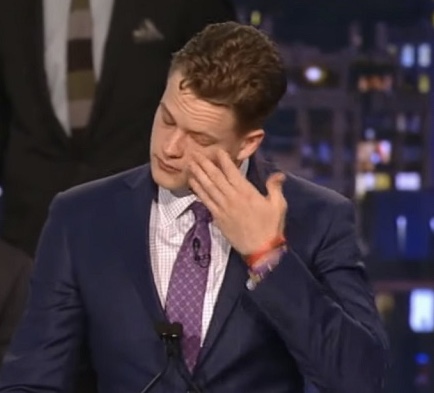
Last weekend, I watched Joe Burrow’s speech after winning the Heisman Trophy. There are certain things you are expected to say in a moment like this. There is a certain level of humility that we hope for and often see from these student-athletes.

But what I witnessed on Saturday evening far surpassed most of the speeches I’ve seen in moments such as this. (If you haven’t watched it, I recommend you do.)

Contrast his words with what has been on this news this last week and what you’ve likely seen on your Facebook feed. Accusations, insults, finger pointing, and more. Vicious attacks from every direction and both sides of the aisle. No one listening while everyone is shouting.

But on a stage in New York City stood a young man who looked more mature than most of people who lead our nation. This 23-year-old from southeast Ohio was more humble than virtually any of the men and women in our nation’s capital who are decades older than he.

Does this contrast say more about this young man or the state of our nation?

I listened to Joe Burrow not just thank his current coaches at LSU, but also his coaches at Ohio State, where he sat on the bench for several years. He did not ignore or attack the coaches who didn’t start him. He praised them for the ways they helped him.

He also took time to encourage those from his childhood region. He took the spotlight off himself and placed it on those living in poverty. Those words, that willingness to lay aside his pride, ended up in hundreds of thousands of dollars being donated to help the very people he recognized.

Imagine if we could have more of that attitude in our leaders. Rather than humbling themselves and focusing on the needs of those they were elected to represent, they demonize their opponents, exploit our worst fears, and grab all the power they can.

Before you think I’m taking sides, let me assure you there is plenty of this in both political parties and on both ends of Pennsylvania Avenue. Let me also to be fair and say there are good things that both parties have done. But the toxic environment overshadows and likely reduces the amount of good that is done.

And if we’re willing to reflect and be honest, this attitude has permeated not just our government, but our business world and even our personal lives. How many businesses have placed profits over people? How many individuals have placed personal gain above compassion for fellow man? While I believe the root causes are many, the reality is that we have lost of sight of those things which are most important.

Let’s go back to that young man standing at the podium last weekend. He could have stood there and talked about himself. Rather, he chose to use his platform to shine a light on those who haven’t had the opportunities he has, and in the process he may have – and I don’t believe this is an exaggeration – saved someone’s life.

As the student stood behind the podium, he became the teacher. I hope we’re all listening, because we all can learn from him.

Recovery, Community, and Love

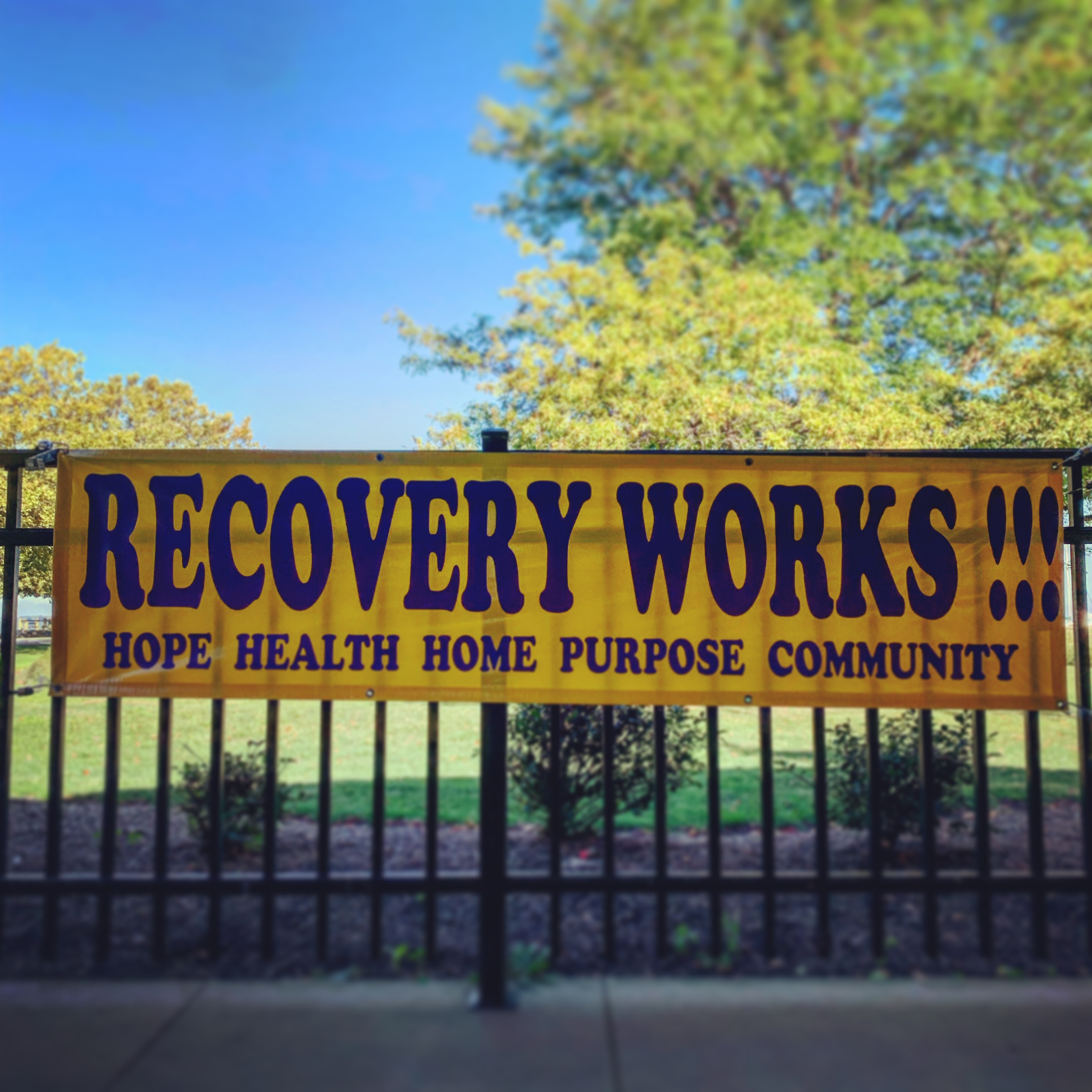
This weekend I attended the Recovery Walk in downtown Sandusky. It was a morning filled with encouragement, support, and love. One of the most moving moments was the recovery countdown. Everyone in recovery stood up and as each number of years of recovery was called out, people began sitting down. One year. Two years. Three years…

The final person standing was celebrating 50 years in recovery. There were loud cheers and applause for this man, as there were for each of the previous milestones.

After this individual with 50 years of sobriety sat down, anyone with less than a year of recovery was asked to stand. Eleven months. Ten months. Nine months…

As each month’s individuals sat down, the recovery veterans shouted out, “Keep coming back!” The last person standing was on her eighth day in recovery. The cheers for her were just as loud as for the man with 50 years of recovery under his belt. They called this young lady up front and everyone applauded her.

Why can’t our politics be more like this?

Why can’t our workplaces be more like this?

Why can’t our communities be more like this?

Why can’t our churches be more like this?

We have a President who loves calling people “losers.”

We have an economic system which tends to reward success and image and often penalizes or undervalues those who face struggles or have shortcomings.

We have communities where addicts are more often targets of gossip than recipients of grace and mercy.

We have churches where true vulnerability and transparency are not welcome.

What I saw this weekend was a community where everyone is welcome, all are loved, and failure brings embrace instead of exclusion.

This summer my town has experienced more than it’s fair share of tragedy, including drowning, murder, and suicide. People have asked why.

I don’t believe there is a simple explanation or answer. Trying to find a scapegoat, an excuse, or a simple explanation is taking the easy – and less meaningful – route. But I do believe the attitudes we develop in our communities, our nation, and our world are part of the solution.

Imagine if instead of insulting those we disagree with we would approach them with compassion.

Imagine if we looked at those with mental health struggles, addictions, and economic disadvantages as equals rather than burdens.

Imagine if we measured peoples’ value by their humanity instead of their productivity.

I was reminded today that our value is intrinsic. Each and every one of us is created in the image and likeness of the same Creator. While some of us have had more opportunities and luck and experienced greater “success,” none of us is better than the other.

If we could be completely honest, each of us would admit we are an addict in recovery from something. If it’s not alcohol, drugs, gambling, or sex, it might be reputation, financial achievement, or pleasure-seeking.

We are all in recovery. We all need community. We all need love. No matter what we look like on the surface, we really aren’t that much different.

Forgiveness

We live in a world where politicians are excoriated for something they said or did decades ago.

We live in a world where someone can’t host an awards show for a joke told years earlier.

We live in a world where people’s pasts continue to mark them and label them.

What has happened to forgiveness?

Don’t get me wrong, there are some missteps that call for consequences. Things like abuse, serious harm, and criminal acts cannot simply be swept under the rug. But there is a marked difference between restorative justice and retribution.

Retribution seeks revenge while restorative justice seeks peace. It seems so much of our world today seeks the former much more than the latter. I’ll say hateful things about you because you said them about me. Someone of my race/nation/group/etc was attacked, so now I’ll attack one of “your people.” You get the idea.

This is where forgiveness comes into play. Forgiveness is able to seek restorative justice but is incompatible with retribution.

What if we learned to embrace and practice forgiveness? What if we could forgive that person who hurt us, offended us, or wronged us? How would that change the dynamic?

I know what some will say. They deserve what they get. Punishment is the greatest deterrent.

I used to feel that way, but I don’t anymore.

How does my retaliation improve the situation? My hatred and anger back towards you throws more gasoline on an already burning fire. Most of the time retribution only sparks more violence and hatred.

Yes, there is a time to defend yourself and we will struggle to agree on where that line should be drawn. But leading with forgiveness can disarm and at least cool down most situations.

In my own life I have wrestled with forgiveness. Forgiveness for the man who ran a stop sign and killed my mom. Forgiveness for the family friend who sexually abused me. Forgiveness for others who have disrupted and derailed my life. None of these have been easy and, in some ways, forgiving these people will be a lifelong journey.

There is a saying attributed to several people, including Nelson Mandela, that states, “Holding onto anger is like drinking poison and expecting the other person to die.” Forgiveness is the pathway to releasing anger and resentment. Forgiveness allows us to transition from retribution to restoration.

Forgiving others is only part of the battle. Most of us – all of us to some extent if we’re honest – need to forgive ourselves as well. Until we learn to do this, forgiving others will be an even bigger challenge. Self-hatred causes anger to simmer inside us, often driving us to hurt others, ourself, or both.

I wonder how many mass shooters harbored self-hatred fueled by an inability to forgive themselves. I wonder how many political leaders lash out at others due to their own unattended issues. I wonder how many of us lash out at others partially due to a repressed or even unrealized need to forgive ourselves.

God knows I still struggle with this daily. Some days are far better than others, but the battle is ongoing. Maybe you don’t wrestle with this like I do or maybe you’re just in denial. Either way, I encourage you to consider how being more forgiving might transform the way you treat others or even yourself. I believe it’s worth the effort.